
- All
- Product Name
- Product Keyword
- Product Model
- Product Summary
- Product Description
- Multi Field Search


Views: 0 Author: Site Editor Publish Time: 2026-10-13 Origin: Site


Pinpointing the exact cost of a gear motor often frustrates procurement teams and facility engineers alike. Prices fluctuate wildly across the market. You might spend a few dollars on basic components for light automation, or you could invest tens of thousands for heavy-duty manufacturing powerhouses. Buyers constantly balance the initial purchase price against long-term mechanical reliability. Opting for cheap motors usually acts as a false economy. A failed drive component during peak production inevitably leads to catastrophic and expensive factory downtime. In this comprehensive guide, we break down specific pricing tiers and explore the hidden engineering factors that drive up expenses. We will help you select the ideal power transmission equipment for your specific application without overspending.
The term encompasses a vast spectrum of mechanical devices. These components drive everything from automated packaging lines to massive rock crushers in mining quarries. Identifying a single universal average price is practically impossible. Instead, engineers categorize pricing based on physical size, power output, and rigorous industrial requirements. To establish a realistic baseline, the market divides these units into three distinct categories based on performance capabilities and manufacturing complexity.
Occupying the lowest tier of the pricing spectrum, micro units primarily serve consumer robotics, small household appliances, and automated window treatments. Operating typically on low-voltage direct current like 12V or 24V, they handle lightweight applications. Massive torque and continuous industrial operation are completely unnecessary here. Their extreme affordability stems directly from their construction materials. The internal gearboxes often feature injection-molded plastic gears or sintered metal components. These cost mere pennies to mass-produce. While highly economical for simple electronics, they inherently lack the structural durability required to survive in commercial manufacturing environments.
Bridging the significant gap between light-duty electronics and heavy industry, standard commercial units serve as everyday automation workhorses. You will frequently find these motors driving packaging machines, commercial HVAC systems, and medium-duty warehouse conveyor belts. They typically feature fractional horsepower ratings and can be configured as either AC or DC setups depending on the facility control architecture.
At this specific price point, build quality experiences a dramatic improvement. Manufacturers transition to machined aluminum housings and solid steel gears to ensure reliable operation over thousands of hours. For buyers looking to source a dependable Geared Motor for standard material handling, allocating a budget between 50 and 500 dollars per unit is a realistic expectation.
When operational demands dictate massive torque output and continuous running under extreme mechanical stress, procurement must shift focus toward the heavy-duty category. These robust units are engineered specifically for harsh environments. Typical applications include underground mining operations, overhead bridge cranes, and large-scale aggregate handling facilities.
Such extreme capabilities command premium prices due to their unyielding construction. They feature thick and ribbed cast-iron housings, precision-cut hardened alloy steel gears, and oversized bearings designed to absorb immense radial and axial loads. Within this upper echelon, a 15,000-dollar price tag is entirely common for multi-stage and high-horsepower assemblies required to move several tons of raw material daily.
Grasping the baseline categories is merely the starting point. Within any given classification, the final Gear Motor Price can swing by hundreds or even thousands of dollars based on highly specific technical specifications and custom modifications.
Unsurprisingly, the most prominent driver of cost is the physical size and raw capacity of the unit. Escalating horsepower or kilowatt requirements necessitate much larger stators, significantly more copper winding, and high-strength rare-earth magnets. As the torque requirement scales up, the internal gearbox must be physically enlarged to accommodate the mechanical stress. Gears must be hobbed thicker and forged from premium-grade steel to prevent catastrophic tooth shearing under heavy shock loads. This exponential increase in raw material volume and machining time directly inflates the final invoice.
The underlying electrical architecture of the motor heavily dictates the financial investment. Standard AC induction motors remain the most cost-effective solution for steady-speed industrial applications. Their simple, brushless, and highly reliable design keeps production costs low. DC motors run slightly more expensive but provide the advantage of easier variable speed control without requiring complex inverters.
In contrast, servo models command a massive financial premium. Servos integrate complex internal encoders and sophisticated feedback loops to achieve pinpoint positioning accuracy. This precision is essential for CNC machining centers and multi-axis robotic arms. Consequently, they are inherently much more expensive to manufacture and calibrate than standard induction variants.
The structural integrity of the outer casing and internal drive components clearly separates budget-friendly options from premium investments. An extruded aluminum housing is lightweight, dissipates heat well, and is cheap to cast. This makes it perfect for standard commercial duty. However, truly heavy-duty applications demand FC250 cast iron. This material is heavier, much harder to machine, and noticeably more expensive to transport.
Internally, metallurgy matters immensely. Standard bronze or nylon gears keep initial costs low but wear out rapidly under friction. Heat-treated and case-hardened alloy steel gears cost substantially more to forge and grind. Yet, they offer decades of uninterrupted service.
Real-world industrial environments are rarely clean or climate-controlled. Motors exposed to airborne dust, direct water spray, or corrosive chemicals demand specialized sealing technologies. This immediately bumps up the manufacturing cost. A baseline IP55-rated motor remains relatively affordable and resists basic dust and water splashes. Upgrading to a stringent IP65 rating requires tighter machining tolerances and premium fluoroelastomer rubber seals.
Furthermore, highly regulated sectors like food processing or pharmaceutical manufacturing often require an IP69K washdown-duty rating. These specialized units must survive daily high-pressure and high-temperature caustic chemical washdowns. Achieving this requires smooth stainless steel housings devoid of crevices and specialized epoxy encapsulations. These upgrades can effortlessly add a 30 to 50 percent premium to the base sticker price.
Beyond technical specifications, macroeconomic trends are currently reshaping the power transmission market. The rapid push toward global factory automation and the integration of industrial sensor networks into legacy equipment have driven up demand for smarter drive systems. Manufacturers increasingly integrate condition-monitoring sensors directly into the motor housing. These sensors predict bearing failures and vibration anomalies before they cause a breakdown. Consequently, the baseline cost of these smart units has risen to accommodate the embedded technology.
Volatility in global commodity markets also directly impacts production costs. Fluctuating prices for raw copper, electrical steel, and rare-earth metals force manufacturers to adjust their pricing models frequently. Additionally, buyers should anticipate that the global push for ultra-high-efficiency motors to meet strict environmental regulations will continue to carry a premium upfront. Modern IE4 and IE5 efficiency standards require superior magnetic materials and tighter manufacturing tolerances. Fortunately, these higher initial capital costs are quickly recovered through significant electrical energy savings over the operational lifespan of the equipment.
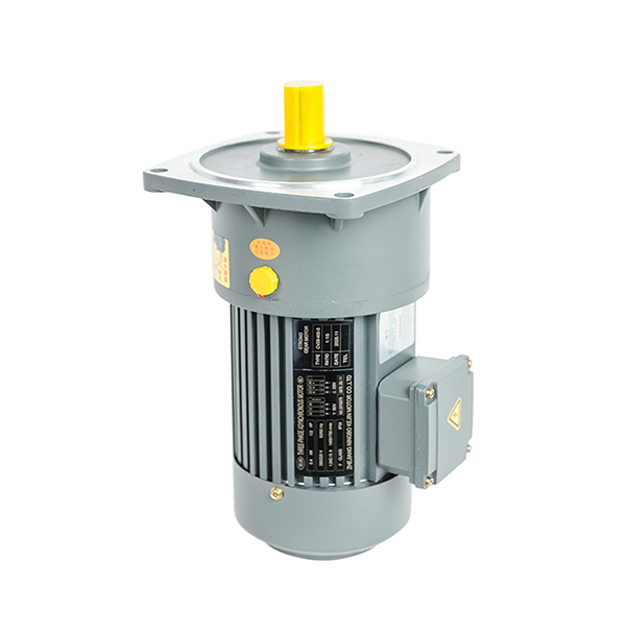
At its core, this equipment is effectively a marriage between an electric prime mover and a mechanical speed reducer. The complex internal geometry of this reducer dictates mechanical performance and efficiency. It also determines the manufacturing difficulty and the retail price.
| Gearbox Architecture | Mechanical Efficiency | Relative Cost Level | Ideal Application Scenario |
|---|---|---|---|
| Worm Gear Reducer | 50% to 80% | Low | Budget-constrained projects, intermittent duty-cycle conveyors |
| Helical Gear Reducer | 94% to 98% | Medium to High | Continuous 24/7 operation, high-efficiency manufacturing lines |
| Planetary Gear Reducer | 90% to 97% | High to Premium | High torque density needs, space-constrained heavy mobile equipment |
Widely considered the gold standard for high-efficiency continuous-duty operations, the helical design features teeth cut at a precise angle. This geometry allows the gear teeth to engage gradually. It results in remarkably smooth and quiet operation alongside an exceptional mechanical energy transfer rate of up to 98 percent.
This superior efficiency comes at a steeper initial cost. Manufacturing helical profiles requires sophisticated CNC gear hobbing and grinding machinery. The extreme precision required to align the angled teeth perfectly without binding translates to longer production cycles and higher skilled labor costs. Despite the higher upfront capital required, unparalleled energy efficiency makes a Helical Gear Motor highly desirable for continuous manufacturing lines where electricity consumption is heavily scrutinized.
If strict budget constraints are the primary concern during procurement, the classic worm gear design serves as the traditional fallback solution. This architecture utilizes a screw-like shaft meshing perpendicularly with a toothed wheel. They are relatively simple to manufacture. Engineers often pair a hardened steel worm with a softer bronze gear, making them the most affordable option on the market.
The hidden financial trap of a worm gear lies in its operating physics. The gears rely entirely on sliding friction rather than rolling friction. This sliding action generates significant thermal energy and results in mechanical efficiency dropping as low as 50 to 80 percent. While the initial purchase invoice might look appealing, the ongoing electrical costs to overcome that friction will be substantially higher.
Planetary designs feature a central sun gear surrounded by multiple rotating planet gears. All of these are enclosed within a stationary outer ring gear. This intricate arrangement distributes the immense torque load across multiple contact points simultaneously. It allows for staggering power output within a very compact cylindrical footprint.
Due to the high quantity of moving internal parts and the extreme microscopic precision required to ensure all gears mesh perfectly, planetary units stand as the most expensive standard gearbox design. They are typically reserved for specialized applications like mobile heavy equipment or robotics. In these scenarios, physical space is strictly limited, but torque demands remain exceptionally high.
Procurement managers often fall into the trap of budgeting exclusively for the unit sticker price. Deploying heavy industrial machinery involves several ancillary expenses that must be meticulously factored into the initial capital expenditure. Ignoring these hidden costs can easily cause a facility upgrade to blow past its allocated budget.
A bare motor and gearbox assembly rarely bolts directly into a custom machine without requiring additional hardware. Depending on the mechanical setup, you may need specific mounting flanges, solid or hollow output shafts, shrink discs, or stabilizing torque arms. Procuring specialized flexible couplings required to handle high starting torques without causing shaft misalignment can easily add hundreds of dollars to the overall expense. If the installation environment is highly restrictive, fabricating custom mounting brackets from structural steel will further inflate the initial investment.
The long-term reliability of any power transmission system is heavily dictated by proper lubrication protocols. While standard mineral oils are cheap and plentiful, high-performance applications often demand advanced synthetic lubricants. These synthetics operate efficiently across much wider temperature extremes and dramatically extend the service life of the gear teeth. However, they can cost three to four times more per gallon than standard oils. Buyers must also factor in the recurring labor costs associated with routine oil sampling, seal inspections, and vibration analysis required to maintain factory warranty validity.
Physical weight is a massive logistical factor frequently overlooked during the initial quoting process. An Industrial Gear Motor housed in thick cast iron can weigh anywhere from one hundred pounds to several tons. Consequently, these massive units absolutely cannot be shipped via standard parcel delivery services. Custom wooden crating and dedicated flatbed freight shipping are mandatory. For international sourcing, buyers must account for ocean freight charges, import tariffs, customs brokerage fees, and potential demurrage delays at ports. All of these logistical elements substantially inflate the final landed cost.
The critical decision between purchasing an off-the-shelf unit and commissioning a custom-engineered solution is a major juncture in the procurement journey. Both approaches offer distinct financial advantages depending on the specific requirements of the end-user facility.
Standardized motors built to universal dimensional specifications are mass-produced on a global scale. This results in a significantly lower initial purchase price due to economies of scale. Because these units are kept in active inventory by manufacturers and distributors, lead times are exceptionally short. From a facility maintenance perspective, standardizing your plant equipment with off-the-shelf motors ensures that replacement parts are universally available. If a standard motor burns out, maintenance teams can quickly swap it with an identical spare from the tool crib. This practice minimizes disastrous production downtime.
While standard units are undoubtedly budget-friendly upfront, they are not always suitable for highly specialized machinery. If an off-the-shelf motor simply does not fit the physical footprint of an existing machine, the labor and material cost to re-engineer the surrounding equipment can far exceed the savings of buying standard.
Specifically, investing in a custom solution becomes the fiscally responsible choice in complex scenarios. For example, when upgrading a heavy-duty agitator, engineers might specify a custom K-series helical-bevel reducer featuring exact gear ratios ranging from 5.36 to 197.37. Custom units are meticulously tailored with specialized housing materials, unique shaft dimensions, and exact performance curves optimized for the niche application. Although buyers pay higher per-unit prices, a tailored solution prevents sweeping machinery redesigns and ensures maximum operational efficiency.
Astute procurement professionals do not finalize purchases based solely on the initial invoice. They evaluate based on the Total Cost of Ownership. The upfront purchase price of an industrial motor typically represents less than ten percent of its total lifetime financial impact. The remaining ninety percent is aggressively consumed by electricity usage, routine maintenance, and potential operational downtime over its lifespan.
Industrial electric motors account for a staggering percentage of global industrial electricity consumption. They often run continuously all week long. At this relentless duty cycle, a motor will consume its own purchase price in electrical costs within the first few months of operation. Therefore, the internal mechanical efficiency of the gearbox is a primary driver of long-term profitability.
Choosing a highly efficient helical design operating at 96 percent efficiency over a budget-friendly worm design operating at 70 percent efficiency may cost extra upfront. However, that massive efficiency gain translates directly to less wasted electrical energy. The energy savings generated by the helical design will routinely offset its higher initial purchase price within the first one to two years of continuous operation. This results in a significantly lower total cost.
The true and painful cost of a low-quality motor becomes glaringly apparent the moment it fails prematurely. Imagine a critical conveyor belt snapping a cheap gear during a peak fulfillment shift. In heavy manufacturing, a single hour of unplanned downtime can easily cost tens of thousands of dollars in lost production, idle labor, and missed delivery deadlines. Investing in a robust premium unit engineered with hardened steel gears and high-capacity bearings acts as a vital insurance policy against catastrophic operational halts. The severe financial risk of production stops must be heavily weighed against the fleeting upfront savings of choosing a cheaper alternative.
Securing the most competitive pricing without sacrificing mechanical integrity requires strategic sourcing. Buying from third-party catalog resellers often provides the convenience of consolidated corporate billing. However, these distributors typically apply a hefty markup of 20 to 40 percent simply to cover their overhead and generate profit. For procurement teams looking to strictly optimize their capital budgets, bypassing the middleman is highly recommended.
Direct-to-manufacturer sourcing eliminates inflated intermediary markups. It provides buyers with direct and unfiltered access to the factory engineering support team. This ensures that the motor is perfectly sized for the exact load profile. It prevents the costly mistake of over-specifying or under-specifying the equipment. By partnering directly with dedicated manufacturers, industrial buyers can secure robust and high-performance Reducer Motor systems tailored to their exact torque requirements while keeping the overall budget strictly controlled.
Ultimately, the final cost of this critical equipment is a direct reflection of its mechanical capabilities, raw materials, and engineering precision. Prices range drastically from a 50-dollar standard commercial unit meant for light conveyors to a 15,000-dollar heavy-duty powerhouse designed to survive the harshest industrial environments imaginable.
When budgeting for a new facility project or machinery upgrade, buyers must fiercely prioritize long-term reliability and electrical energy efficiency over the lowest initial sticker price. By thoroughly understanding the hidden cost drivers such as torque capacity, internal gear design, sealing ratings, and synthetic lubrication needs, you can accurately specify the exact motor you need without overpaying. Always evaluate the Total Cost of Ownership. Consider reaching out directly to the specialized manufacturing engineering teams at Huake Gearbox to ensure your capital investment delivers decades of reliable and uninterrupted performance.
The manufacturing process for helical gears requires complex precision CNC machining to accurately cut the angled teeth. This tight-tolerance machining ensures smooth meshing, which drastically reduces internal friction and heat generation. While this intricate process drives up the initial production cost, helical gearboxes boast an outstanding operational efficiency of up to 98 percent. In contrast, worm gears are structurally simpler and much cheaper to manufacture but lose a significant amount of energy to sliding friction. Over time, the massive energy savings from a helical design will heavily outweigh its higher initial purchase price.
Yes, repairing an existing unit is frequently more cost-effective than a complete replacement, provided the primary stator windings and the main cast-iron gearbox housing remain undamaged. Routine wear components, such as bearings, rubber oil seals, and individual pinion gears, can be successfully replaced by a qualified maintenance technician. However, if the motor windings are severely burnt out due to a thermal overload or the main housing is structurally cracked, the combined labor and parts required for a rebuild will likely exceed the cost of purchasing a brand-new and fully warrantied unit.
A reducer motor is simply an alternative industry term for a geared motor. It consists of a standard electric motor directly coupled to a mechanical gear reducer. The primary purpose of the reducer is to lower the high rotational speed of the electric motor while simultaneously multiplying the torque output. The cost of these units is determined by the complexity of the internal gear train, the specific reduction ratio required, and the overall torque capacity, rather than the specific terminology used by the supplier.
When correctly specified for the specific load profile of the application and properly maintained, a high-quality industrial unit is engineered to last between 10 and 20 years. Reaching this maximum operational lifespan requires strict adherence to the recommended maintenance schedule. This includes performing routine synthetic lubrication changes, conducting vibration monitoring, and ensuring the motor is never subjected to continuous thermal overloads or severe torque spikes that exceed its designated service factor rating.
Proper sizing requires calculating the exact torque and speed requirements of your driven load. Engineers must determine the required output RPM, the continuous running torque, and any potential shock loads during machine startup. Factoring in the service factor based on daily operating hours and ambient temperature is crucial. Undersizing leads to premature mechanical failure, while oversizing inflates your initial purchase price unnecessarily. Consulting directly with the engineering team at Huake Gearbox is the safest way to ensure an accurate and cost-effective fit.
For applications requiring significant speed reduction where energy efficiency is not the top priority, worm gear motors are generally the most cost-effective upfront choice. Their right-angle design saves physical space, and the simple internal mechanics keep manufacturing costs exceptionally low. However, they are best suited for intermittent duty cycles rather than continuous round-the-clock operation due to their higher internal heat generation.


