
- All
- Product Name
- Product Keyword
- Product Model
- Product Summary
- Product Description
- Multi Field Search


Views: 0 Author: Site Editor Publish Time: 2026-10-16 Origin: Site


Can your gearbox handle more than steady loads? Startup resistance and shock loads also demand attention. An Industrial Gearbox must match the machine’s full operating profile. You’ll learn which applications require high torque and how sizing, cooling and maintenance support reliable performance.
An industrial gearbox for mining conveyors must overcome belt resistance and move substantial material loads. Starting a loaded conveyor can create different demands from steady operation. Inclines, changing feed rates and pulley forces also affect selection. Assess braking or backstop requirements separately, particularly where reverse movement could disrupt operation.
Crushers experience changing resistance as material enters the processing chamber. Impact events and possible blockages can create short-duration loads above normal running torque. An industrial gearbox for crushers therefore needs a clearly defined load profile. Review overload protection and the complete drivetrain rather than relying on a general heavy-duty description.
Grinding equipment combines process resistance and substantial rotating inertia. Starting conditions may differ considerably from stable production. An industrial gearbox for cement mills needs suitable mechanical and thermal capacity. Horizontal mill drives and specialized vertical mill arrangements require separate assessment because their load paths and supporting requirements differ.
Rotary kilns require controlled movement under substantial process loads. Slow rotation does not imply a lightly loaded transmission. Evaluate startup resistance, operating continuity and heat around the installation. Where the process requires auxiliary movement during maintenance, review its drive arrangement alongside the main transmission.
An industrial gearbox for extruders must address process torque and axial thrust. Single-screw and twin-screw machines also have different output arrangements. Material changes can alter resistance during production. Specialized extruder gearbox documentation identifies dedicated thrust-bearing arrangements, showing why torque capacity alone cannot establish suitability.
Mixer torque depends on batch size, material viscosity and the mixing process. Startup resistance may increase when material settles or becomes more viscous. Review forces transmitted through the mixing shaft alongside running torque. Confirm whether additional bearing support is needed before connecting the gearbox directly to the assembly.
Tip:Describe the driven process and startup conditions when requesting a high-torque industrial gearbox quotation.
At a given transmitted power, lower rotational speed corresponds to higher torque. However, gearbox capacity still limits the usable output. Define speed and torque at the driven machine before selecting equipment. Include transmission losses when estimating available output torque, then check the exact model’s approved ratings.
Acceleration, material impact and blockages create different loading events. Their magnitude, duration and frequency all influence gearbox selection. A brief exceptional event differs from an overload repeated throughout every shift. Record these conditions separately so the supplier can assess peak capacity and expected operating life.
Long operating hours make heat removal an important selection factor. A gearbox may satisfy mechanical requirements while exceeding its permissible thermal loading. Check ambient temperature, ventilation and nearby heat sources. Cooling provisions must suit the proposed operating point and actual installation rather than a general product description.
Dust and moisture can affect seals, breathers and lubricant cleanliness. Process residues may also collect around cooling surfaces or inspection points. Specify exposure conditions before choosing protective features. Maintenance procedures should prevent contamination entering the gearbox during lubricant checks, filling and component servicing.
Record running torque, output speed, operating hours, starts and reversals. Identify how loads change during startup, processing and shutdown. Distinguish routine conditions from occasional or exceptional events. Representative measurements help suppliers evaluate suitability more accurately than motor power and a broad application label.
Service factors account for operating demands through the selected manufacturer’s sizing method. They should be applied using the actual duty description. Avoid assuming one factor covers every blockage or impact event. Verify permissible peak torque separately where the process creates loads outside ordinary operation.
Shaft connections can introduce forces beyond transmitted torque. Review pulley tension, sprocket forces, coupling effects and process thrust at their actual locations. Extruders and some mixers require particular attention to bearing support. Confirm which loads the gearbox can accommodate and which need separate supporting components.
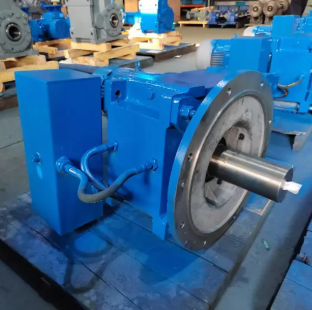
Check shaft arrangement, mounting interfaces, motor compatibility and installed orientation together. HUAKE’s HB-series industrial gearbox lists several installation and output connection options. These include base mounting and different solid-shaft or hollow-shaft arrangements. Confirm the exact supplied configuration through an approved drawing.
The following table summarizes the main application checks.
| Application | Main operating demand | Selection priority |
|---|---|---|
| Mining conveyor | Loaded starts and changing material loads | Startup torque, shaft loads and reverse-movement control |
| Crusher | Impact and fluctuating resistance | Peak capacity and overload protection |
| Cement mill | Grinding resistance and rotating inertia | Startup assessment and thermal capacity |
| Rotary kiln | Slow movement under substantial loads | Running torque and operating continuity |
| Extruder | Process torque and axial thrust | Specialized output and thrust-bearing arrangements |
| Mixer | Changing viscosity and batch conditions | Startup resistance and shaft support |
Tip:Provide connection drawings alongside load data to reduce specification gaps before purchasing.
Helical and bevel-helical arrangements offer different shaft layouts for industrial machinery. Parallel-shaft configurations and right-angle configurations address different installation needs. Compare available space, required ratio and connection geometry before selection. HUAKE’s helical gear reducer range provides a starting point for reviewing relevant product families.
Planetary arrangements can suit applications requiring substantial torque within restricted space. Their suitability still depends on the exact gearing, bearings and output connection. Review operating loads and thermal requirements alongside dimensions. A high-torque planetary gearbox does not automatically provide the backlash or accuracy needed for precision positioning.
Some processes need specialized bearing systems and load paths. Vertical mills and extruders cannot be assessed through general torque ratings alone. Confirm thrust capacity, output geometry and supporting arrangements against process requirements. A general-purpose industrial gearbox needs documented application approval before replacing a purpose-designed transmission.
Tip:A heavy-duty rating does not establish suitability for every mill, extruder or mixing arrangement.
Foundations and mounting structures must support gearbox weight and operating reaction forces. Inspect mounting surfaces and align connected shafts using the specified procedures. Avoid forcing misaligned components together during fastening. Installation stress can add unintended loads even when the selected gearbox has adequate nominal capacity.
Confirm lubricant specification and quantity for the actual configuration and orientation. Inspect fans, cooling surfaces and circulation equipment where fitted. Follow servicing instructions appropriate to operating conditions. HUAKE’s HB-series description includes heat-dissipation features, but the proposed assembly still requires an application-specific thermal assessment.
Establish baseline observations after commissioning under representative loading. Compare later readings at similar speeds, loads and ambient conditions. Track lubricant condition alongside temperature, vibration and leakage. Investigating changes early helps maintenance teams identify developing problems before production experiences an unexpected interruption.
Tip:Record machine load alongside condition readings so maintenance comparisons remain meaningful.
Repeated heating may indicate excessive duty, restricted cooling or lubrication problems. Compare actual operating conditions against the assumptions used during selection. Inspect ventilation and cooling equipment before changing settings. Adequate torque capacity cannot compensate for a thermal mismatch inside a hot or confined installation.
Changes in vibration or noise can originate outside the gearbox. Check couplings, mounting bolts, foundations and driven equipment alongside the transmission. Review recent impact events or process changes. Compare symptoms under similar operating conditions before deciding whether installation problems or internal damage require further investigation.
Repeated damage requires reviewing the application before installing an identical replacement. Compare actual loads, external shaft forces and operating hours against approved limits. Inspect lubrication and contamination controls as part of the investigation. Replacing damaged parts alone may leave the original cause unresolved.
Confirm the exact ratio, gear architecture, shaft arrangement and model configuration. Request mechanical, thermal and external-load assessments for the intended duty. Review evidence from comparable operating conditions where available. Broad reliability statements should support the discussion, while documented ratings govern the final selection.
Compare purchase price alongside installation work, electricity and maintenance requirements. Include spare-parts availability, repair access and the consequences of downtime. Evaluate proposals delivering equivalent output speed, capacity and duty. A lower initial price offers limited value if the complete installation creates higher operating costs.
Define checks for output speed, loading, temperature, vibration and leakage before delivery. Confirm lubrication, cooling and mounting requirements before startup. Retain approved drawings and commissioning records for future reference. Use agreed acceptance criteria to evaluate the installed drive under representative production conditions.
An Industrial Gearbox must handle running torque and startup loads. Conveyors, crushers, mills and mixers create different operating demands.
Correct sizing, cooling and lubrication support reliable performance. Installation quality and maintenance also help preserve those benefits.
HUAKE offers configurable HB-series industrial gearboxes for varied installation needs. Their mounting and shaft options help match transmissions to machine requirements.
A: An Industrial Gearbox converts motor speed into usable torque.
A: A high-torque Industrial Gearbox serves suitable conveyors, crushers, mills and mixers.
A: Select an Industrial Gearbox by torque, duty, cooling and shaft loads.
A: Compare layout, capacity and operating requirements.
A: Configuration, installation, energy and maintenance influence total cost.
A: Check loading, lubrication and cooling.


