
- All
- Product Name
- Product Keyword
- Product Model
- Product Summary
- Product Description
- Multi Field Search


Views: 0 Author: Site Editor Publish Time: 2025-06-16 Origin: Site


Purchasing gear reducers is a significant decision for many industries, impacting not only the initial investment but also the long-term performance and operating expenses of your machinery. While it can be tempting to focus solely on the upfront price, a strategic approach to cost control ensures that you get the best value without compromising reliability or efficiency. At Qingdao Chinese Science Machinery Co., Ltd., we understand the importance of balancing cost and quality to help our customers optimize their budgets and operational outcomes. In this article, we will discuss practical cost-saving strategies that you can apply when selecting and purchasing gear reducers.
Effective cost control starts with understanding the full scope of your needs and the total cost implications of your purchase. The goal is not just to buy the cheapest gear reducer but to achieve the best balance between quality and budget. Over-specification — choosing a gear reducer with higher capacity or extra features that are unnecessary — may lead to inflated purchase costs and inefficient operation, including wasted energy and increased wear.
On the other hand, under-specification risks equipment failure, unplanned downtime, and expensive repairs. Therefore, cost control requires a precise match between the gear reducer's capabilities and the demands of your machinery.
Furthermore, it is vital to consider the total cost of ownership (TCO). This includes not only the initial purchase price but also installation, maintenance, energy consumption, spare parts availability, and lifespan. For example, a slightly more expensive gear reducer with better energy efficiency and longer maintenance intervals can save significant operating costs over time. Evaluating cost from this holistic perspective helps avoid short-term savings that result in long-term expenses.
Deciding whether to purchase gear reducers in bulk or on a per-project basis depends on your business needs and operational plans. Bulk purchasing offers clear cost advantages, such as volume discounts, lower freight charges, and better supplier negotiation leverage. For companies with multiple similar machines or repeat projects, buying in volume can improve budgeting and reduce per-unit cost.
However, bulk purchasing involves considerations such as storage space, inventory management, and the risk of parts becoming obsolete if your specifications or technologies change. For smaller or specialized projects, ordering gear reducers individually allows flexibility to tailor choices to specific requirements and reduces capital tied up in inventory.
Lead time and delivery scheduling are also critical factors. If your supplier offers short lead times and reliable delivery, just-in-time purchasing can optimize cash flow and minimize storage needs. Conversely, if delivery times are long or uncertain, ordering larger quantities ahead of time can avoid project delays and reduce emergency procurement costs.
The selection between different brands and models is a key step in managing costs effectively. Brand reputation often influences price, but the highest price does not always guarantee the best performance or suitability for your application.
Careful evaluation should include feature comparison such as torque capacity, efficiency, noise level, and ease of maintenance. Some lesser-known manufacturers offer competitive products with comparable or even superior specifications at lower prices.
Warranty terms and after-sales support are equally important. A brand that provides extended warranties, readily available spare parts, and responsive technical assistance can reduce repair costs and downtime, which adds significant value over the gear reducer’s lifecycle.
Consider the compatibility of the gear reducer with your existing equipment and future upgrade plans. Models that support modular expansions or have standardized mounting options help avoid costly modifications.
Standard gear reducers are mass-produced units designed to meet common industrial requirements. Opting for standard models is often a cost-effective solution because of economies of scale. Mass production lowers manufacturing costs, which are then passed on as savings to customers.
Standard gear reducers also benefit from wide availability of spare parts and accessories, reducing lead times for maintenance or repair. This reduces machine downtime and associated productivity losses.
However, it is important to confirm that standard models meet all technical specifications of your machinery. When the application requires specialized performance, excessive customization can escalate costs and extend delivery time. In such cases, avoid unnecessary customization to keep expenses under control.
Additionally, standard models typically have well-documented installation and maintenance procedures, which can simplify training and reduce the need for expensive specialist labor.
A critical but sometimes overlooked aspect of cost-saving is evaluating the lifecycle cost of gear reducers. This comprehensive analysis covers all costs incurred throughout the equipment’s service life.
Maintenance is a major factor. Gear reducers designed for easy servicing, with accessible components and robust construction, reduce labor and parts replacement expenses. For example, products with longer lubricant change intervals or integrated lubrication systems minimize maintenance frequency and costs.
Energy efficiency directly impacts operational expenses. A gear reducer with higher efficiency reduces electricity consumption, which can account for a substantial portion of total lifecycle cost. Investing in energy-efficient models often yields rapid returns through lower utility bills.
Spare parts availability also affects lifecycle cost. Choosing a brand or model with a strong global supply chain ensures you can quickly obtain replacement parts, avoiding prolonged downtime and costly emergency orders.
Lastly, consider the upgrade paths and adaptability of the gear reducer. Equipment that can accommodate future technological improvements or changes in production needs extends its useful life, protecting your investment.
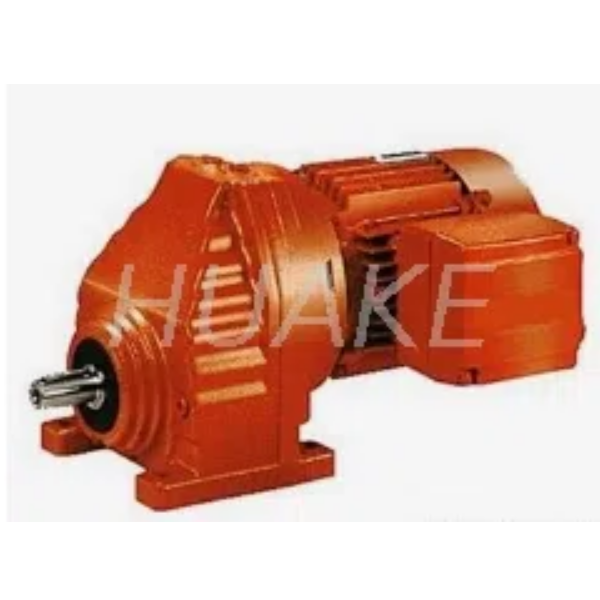
Cost-saving when purchasing gear reducers is about making informed decisions that consider both short-term and long-term factors. By balancing quality and budget, deciding on bulk or project-based purchasing, carefully selecting brands and models, opting for standard products when suitable, and evaluating the full lifecycle cost, you can maximize the value of your investment.
At Qingdao Chinese Science Machinery Co., Ltd., we are dedicated to providing high-quality gear reducers that deliver exceptional performance at competitive prices. Our experts are ready to help you identify the right product that fits your operational needs and budget constraints.
Contact Us
For personalized consultation, detailed product catalogs, or competitive quotes, please contact Qingdao Chinese Science Machinery Co., Ltd. Let us assist you in implementing cost-saving strategies while ensuring reliable and efficient gear reducer performance for your machinery.


