
- All
- Product Name
- Product Keyword
- Product Model
- Product Summary
- Product Description
- Multi Field Search


Views: 0 Author: Site Editor Publish Time: 2026-10-17 Origin: Site


In the realm of modern mechanical engineering, power transmission systems are constantly pushed to their limits. Engineers often celebrate coaxial gear arrangements for their compact size and exceptional load-bearing capabilities. You will frequently find them powering automated robotics, aerospace components, and heavy-duty manufacturing equipment. However, no mechanical system is entirely flawless. Understanding the hidden mechanical drawbacks is just as critical as knowing the benefits before making a heavy financial investment.
Evaluating the limitations of a Planetary Gear Reducer is a mandatory step in the decision-making process. In this guide, we will explore the primary disadvantages, ranging from steep manufacturing costs to highly complex maintenance requirements. By objectively analyzing these factors, facility operators can determine if this technology truly fits their specific industrial application.
To fully grasp why these vulnerabilities exist, we must first examine the foundational mechanics. A standard setup consists of a central sun gear, multiple orbiting planet gears, a stationary outer ring gear, and a carrier. The sun gear transmits power outward. Multiple gears mesh simultaneously, revolving around the center while spinning on their own axes.
While this design allows for exceptional power density within a constrained footprint, the sheer number of moving parts interacting concurrently creates unique mechanical stress points. Multiple gear meshes must occur at the exact same millisecond. If a single component falls slightly out of specification, the entire transmission suffers.
In mechanical engineering, condensing massive power into a small physical space inherently leads to compromises. Imagine forcing industrial-scale torque into a housing no larger than a standard electric motor. The internal components are inevitably subjected to intense stress concentrations. This density restricts airflow, limits internal space for robust bearings, and complicates the physical arrangement of the parts. Ultimately, this fundamental trade-off between spatial efficiency and mechanical complexity is the root cause of the financial and operational disadvantages discussed below.
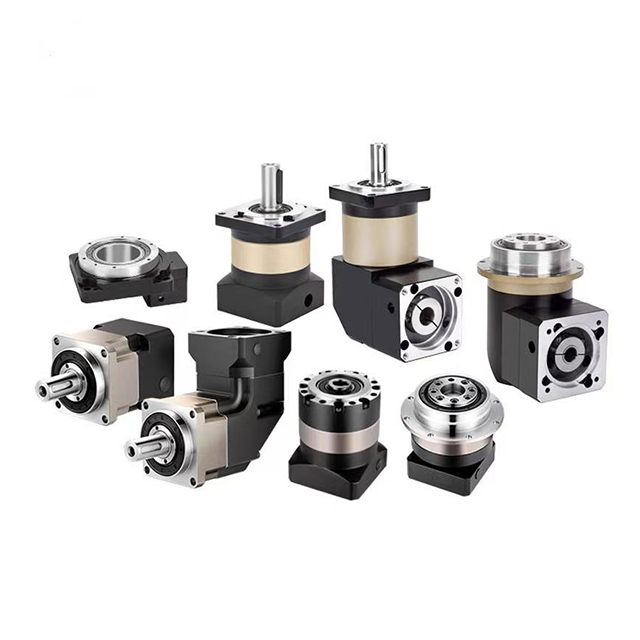
The most immediate barrier to entry is the steep financial investment. Producing a reliable Precision Planetary Gearbox is an exercise in extreme engineering accuracy. For the system to function correctly without tearing itself apart, the mechanical load must be shared equally among all the orbiting gears.
Specifically, achieving this perfect load distribution requires incredibly tight manufacturing tolerances. For instance, achieving a premium backlash rating of less than 3 arc-minutes demands advanced CNC machining, precision gear hobbing, and specialized grinding techniques. Furthermore, the immense internal stresses demand high-grade, heat-treated alloy steels rather than standard cast metals. These premium materials and advanced manufacturing processes significantly inflate the initial purchase price.
When evaluating the Total Cost of Ownership, this high initial purchase price acts as a significant hurdle for budget-conscious projects. Compared to standard parallel shaft setups, the capital expenditure for a coaxial system of equivalent torque can be substantially higher. Plant operators must carefully calculate whether the space-saving benefits truly justify the steep upfront costs, especially in factory environments where physical space is abundant.
Beyond the initial purchase, operational downtime remains a critical metric in industrial environments. This is where enclosed coaxial systems often struggle the most. The structural design is inherently nested. Critical bearings and the central sun gear are entirely trapped within the outer ring gear assembly.
Because of this enclosed architecture, accessing internal components for routine visual inspections is highly labor-intensive. Unlike a standard helical setup where a maintenance crew might simply unbolt a top cover plate on the factory floor, servicing this unit typically involves uncoupling it completely from the motor. Plant managers often need a hoist just to move the unit to a workbench for total disassembly. Consequently, the Mean Time To Repair spikes drastically, leading to extended machinery downtime that can cost facilities thousands of dollars in lost production.
In addition, maintenance complexity is further compounded by stringent labor requirements. Not all mechanical technicians possess the specific training required to service these units. Reassembling the system requires exact torque specifications, careful alignment of timing marks, and precise bearing preloads. Employing specialized technicians adds an ongoing premium to the maintenance budget.
Compounding the maintenance difficulties are the thermal challenges inherent to the design. Thermal management remains one of the most persistent hurdles encountered by engineers. A High Torque Gearbox generates significant internal friction due to the multiple simultaneous gear meshes occurring at high input speeds.
In a traditional parallel-shaft setup, the large physical housing acts as a natural heat sink, radiating thermal energy into the surrounding environment. In contrast, the prized compact size of a coaxial reducer means there is far less metal available to dissipate heat. Operating temperatures can easily exceed 90 degrees Celsius under continuous heavy loads. As internal temperatures rise, the thermal expansion of metal components alters the carefully machined clearances.
More critically, excessive heat rapidly degrades the viscosity of lubricating oils. Facility operators frequently must invest in expensive external cooling mechanisms, such as forced-air heat sinks or integrated water-cooling jackets, to prevent premature seal degradation. High-temperature synthetic lubricants are also a strict requirement, further driving up ongoing operational expenses.
Closely tied to thermal management is the complex fluid dynamics of the system. Lubrication in a Planetary Drive is not merely about reducing metal-on-metal friction. The planet gears do not just spin; they physically revolve in a high-speed orbit.
This continuous orbital motion generates immense centrifugal forces. As the carrier spins, these forces actively push lubricating oil away from the center of the planet gears, exactly where the critical needle bearings are located. If these bearings are starved of oil for even a short period, they will overheat and seize. Because the bearings are already under severe radial loads due to the torque transmission, they are exceptionally vulnerable to any disruption in the lubrication film.
Getting oil to evenly coat multiple meshing points simultaneously requires sophisticated engineering. Standard splash lubrication is frequently insufficient for continuous high-speed applications. Manufacturers must design complex internal oil galleries or mandate pressurized forced-lubrication systems. Any drop in oil pressure or neglect in maintenance schedules can lead to rapid, irreversible machinery damage.
While high-quality precision gears are generally known for smooth operation, their acoustic performance relies entirely on absolute mechanical symmetry. If there is any slight manufacturing defect, uneven wear over time, or minor misalignment between the motor shaft and the gearbox, the load will not be shared equally.
When one gear takes more mechanical load than the others, it causes microscopic deflections in the carrier. This results in transmission error, manifesting as noticeable noise and harshness. Because of this sensitivity, standard-grade systems can be surprisingly loud under heavy loads. For applications requiring absolute silence, such as medical imaging equipment or theater stage automation, buyers must upgrade to ultra-low backlash precision grades with helical teeth, which drastically increases procurement costs.
Looking at the broader manufacturing landscape, the way engineers approach these mechanical limitations is rapidly shifting. Recent industrial engineering analyses highlight a growing tension between the demand for miniaturization and the frustration over high maintenance downtime. As continuous-duty automation becomes the standard across global manufacturing sectors, the thermal and accessibility limitations of enclosed gear systems are coming under heavier scrutiny.
To combat these inherent disadvantages, the industry is seeing a massive surge in internet-connected condition monitoring. Rather than relying on reactive maintenance, facility managers are integrating real-time vibration, temperature, and oil particle sensors directly into the gearbox housing. This technological shift addresses the traditional blind spots of the nested architecture by predicting bearing failures before they cause catastrophic line stoppages. While this trend significantly improves reliability, it also requires a much higher initial capital investment to implement the necessary sensor infrastructure and data analytics platforms.
Understanding these disadvantages is about making an informed, pragmatic purchasing decision rather than avoiding the technology entirely. In industries such as aerospace, automated robotics, and heavy mobile machinery, the absolute need for extreme torque within a constrained physical space makes this the only viable engineering choice.
Mitigating the drawbacks requires a highly proactive approach. Facility managers can overcome heat and wear issues by strictly adhering to original equipment manufacturer service intervals and utilizing premium synthetic lubricants designed specifically for high shear stability. Ensuring absolute precision during the initial alignment phase will also prevent premature vibration issues. By acknowledging the limitations upfront, buyers can budget appropriately for the necessary cooling and maintenance infrastructure.
If the rigorous maintenance demands and thermal challenges are dealbreakers for your specific project, the market offers several robust alternatives. Consulting with an Industrial Reducer specialist can help you pivot to a system that better aligns with your budget and space availability.
| Gearbox Type | Primary Advantage | Key Disadvantage | Best Use Case |
|---|---|---|---|
| Planetary | Extreme torque density in a compact size. | High cost and complex maintenance. | Robotics, aerospace, servo motors. |
| Helical | Excellent heat dissipation and easy to repair. | Large physical footprint. | Conveyors, large factory equipment. |
| Worm Gear | Cost-effective right-angle drive with self-locking. | Low efficiency due to high sliding friction. | Hoists, lifts, packaging machinery. |
The primary disadvantages of coaxial gear systems are clear and impactful. They demand a substantial initial budget due to complex manufacturing requirements. Maintenance necessitates strict attention, specialized labor, and extended downtime. Heat generation and delicate fluid dynamics present ongoing operational challenges that require rigorous upkeep to prevent failure.
However, their unmatched compact power remains highly valuable for specialized industries. Evaluate your specific torque needs, spatial constraints, and maintenance budget carefully before deciding. If you are unsure whether this technology fits your application, or if you need to calculate exact thermal and load parameters, explore the high-performance solutions at Huake Gearbox. Consult with expert engineers to find the perfect, most cost-effective power transmission solution for your long-term project success.
The primary disadvantage is the high manufacturing complexity. Because multiple gears must mesh perfectly and share loads equally, they require incredibly tight manufacturing tolerances. This complexity directly results in higher purchasing costs and much more difficult, time-consuming maintenance compared to simpler parallel-shaft gear systems.
Yes, thermal management is a known vulnerability. Because of their highly compact, power-dense design, these gearboxes have significantly less exterior surface area to dissipate internal heat. The friction generated by multiple meshing gears can trap heat inside the housing, making external cooling systems or specialized synthetic oils a critical requirement for high-speed applications.
A well-manufactured, perfectly aligned precision gearbox is relatively quiet. However, the system is highly sensitive. If there is any internal wear, slight shaft misalignment, or unequal load distribution among the planet gears, it disrupts the mechanical balance. This imbalance can produce significant noise and damaging vibrations throughout the machinery.
The difficulty stems from the nested internal architecture. The sun gear and planet gears are completely enclosed within the outer ring gear and carrier assembly. Accessing a single faulty planet gear or a worn bearing usually requires the complete removal and total disassembly of the unit, leading to extended equipment downtime and requiring specialized labor.
In a single stage, coaxial designs are highly efficient, often reaching up to 97 percent efficiency. However, if an application requires multiple stages to achieve a very high reduction ratio, the cumulative friction from the numerous gear meshes can slightly lower the overall efficiency compared to a highly optimized multi-stage helical drive.
When properly sized for the load and rigorously maintained with correct lubrication, a premium industrial unit can operate reliably for 10,000 to 20,000 hours or more. However, neglecting oil changes or exposing the unit to excessive heat and shock loads will drastically reduce this lifespan, often leading to premature bearing failure within just a few thousand hours.


