
- All
- Product Name
- Product Keyword
- Product Model
- Product Summary
- Product Description
- Multi Field Search


Views: 0 Author: Site Editor Publish Time: 2026-10-12 Origin: Site


A gearbox and a gear reducer are closely related mechanical transmission devices, and in many industrial conversations the two terms are used interchangeably. The main difference is that “gearbox” is a broader term describing an enclosed system of gears, shafts, bearings, seals, and lubrication used to transmit mechanical power, while “gear reducer” usually describes a gearbox specifically designed to reduce rotational speed and increase usable output torque. Most industrial reducers are therefore gearboxes, but not every gearbox must function only as a speed reducer. A gearbox can also change shaft direction, distribute power, increase speed in some specialized systems, or provide several transmission functions at the same time. In conveyors, mixers, packaging equipment, lifting systems, mining machinery, and industrial production lines, however, the word gearbox often refers to the same speed-reduction function as a gear reducer. This is why product catalogs may describe similar equipment as a helical gearbox, helical gear reducer, speed reducer, or geared transmission. The terminology becomes even more confusing when an electric motor is attached, because the complete assembly may then be called a gear motor or geared motor. For engineers and buyers, the name is less important than the actual transmission ratio, torque capacity, efficiency, shaft layout, mounting arrangement, duty cycle, and motor interface. HUAKE supplies several gearbox and reducer designs for industrial power transmission, including helical, bevel, worm, planetary, cycloidal, and cylindrical configurations. Understanding the terminology helps purchasing teams compare quotations correctly and prevents them from assuming that products with different names necessarily perform different mechanical functions.
The easiest way to understand the difference is to separate the mechanical structure from the intended function. A gearbox is the general mechanical assembly that contains gears and transmits power between shafts. A gear reducer is a gearbox whose primary purpose is to reduce input speed. The reducer normally receives relatively high rotational speed from a motor and delivers lower speed with increased torque to the driven equipment. In most factory machinery, that is exactly what the gearbox is doing, which explains why manufacturers and engineers often use both terms for the same product. The distinction becomes more important in technical documents where a gearbox may perform functions other than simple reduction. Some gearboxes can increase speed, reverse rotation, redirect torque through a right-angle arrangement, or distribute power between several outputs. An industrial reducer can also change shaft direction while reducing speed, but the reduction function remains central to its specification. The words “speed reducer” and “gear reducer” are generally more specific because they immediately indicate that output speed is lower than input speed. The word “gearbox” gives less information about the direction of the speed change. Buyers should therefore confirm the actual ratio and output speed instead of making assumptions from the product name. The table below summarizes the terminology commonly encountered in industrial power transmission.
| Term | General Meaning | Typical Function |
|---|---|---|
| Gearbox | Broad enclosed gear transmission | Transfer, reduce, increase, or redirect power |
| Gear Reducer | Gearbox designed for reduction | Reduce speed and increase usable torque |
| Speed Reducer | Another term for gear reducer | Reduce rotational speed |
| Gear Motor | Motor and reducer combined | Deliver motor power at reduced output speed |
| Servo Gearbox | Precision reducer for servo systems | Torque multiplication and precise motion |
| Industrial Gearbox | Heavy-duty transmission unit | Power transmission under industrial loads |
A gearbox is an enclosed mechanical system that transfers rotational power through gears mounted on one or more shafts. The housing keeps the gears aligned while supporting bearings, seals, lubrication, and other internal components required for reliable operation. Different gear arrangements allow the gearbox to change rotational speed, torque, shaft direction, or all three at the same time. The internal gearing may use helical, bevel, worm, planetary, cycloidal, cylindrical, or other gear geometry depending on the intended machine. In a simple industrial drive, the gearbox receives power from an electric motor and delivers it to a conveyor, mixer, pump, processing machine, or another mechanical load. Some gearboxes have input and output shafts on the same axis, while others use parallel or right-angle shaft arrangements. The gearbox housing also protects internal components from external contamination and helps retain lubricant around the gears and bearings. Industrial gearboxes can range from small aluminum worm units to large cast-iron systems transmitting substantial power in mining or process machinery. Mechanical efficiency depends on gear geometry, number of stages, lubrication, speed, load, bearing friction, and seal resistance. A gearbox therefore describes the complete transmission assembly rather than one particular reduction ratio or gear type. When purchasing one, buyers should examine what the gearbox actually does instead of assuming its function from the general term alone.
A gear reducer is a type of gearbox specifically configured so that the output shaft rotates more slowly than the input shaft. This reduction allows the drivetrain to convert a high-speed motor output into a lower speed that is more suitable for the working machine. As rotational speed decreases, available output torque generally increases in proportion to the reduction ratio and transmission efficiency. For example, a motor running at approximately 1,500 rpm may need a reducer before driving a conveyor that operates at only a small fraction of that speed. The ratio is determined by the relationship between the input speed and required output speed. A theoretical 30:1 reducer would reduce a 1,500 rpm input to approximately 50 rpm before accounting for operating variations. Gear reducers can use several gear stages when a single gear pair cannot provide the required total ratio. They may also redirect the transmission through parallel or right-angle shafts while reducing speed. A F Series Parallel Shaft Helical Gearmotor provides one example of an industrial reducer architecture that combines speed reduction with a parallel-shaft layout for power transmission. The current HUAKE product configuration covers multiple ratios, output torques, motor powers, and mounting options for different machinery requirements. A gear reducer should therefore be viewed as a gearbox defined primarily by its speed-reduction function rather than as an entirely different category of mechanical device.
| Parameter | Meaning |
|---|---|
| Input Speed | Rotational speed entering the reducer |
| Output Speed | Lower rotational speed leaving the reducer |
| Reduction Ratio | Input speed ÷ output speed |
| Input Torque | Torque supplied by the motor |
| Output Torque | Increased torque after reduction |
| Efficiency | Mechanical power retained through transmission |
| Gear Stages | Number of reduction stages inside the unit |
In many industrial applications, yes, the two terms effectively describe the same equipment. A supplier may call a product a gearbox while another supplier lists an almost identical unit as a gear reducer. Maintenance teams may use “gearbox” when referring to the physical housing installed on the machine, while design engineers may use “reducer” when discussing the required speed ratio. A conveyor drive gearbox, for example, normally functions as a gear reducer because it receives relatively high motor speed and delivers lower output speed with increased torque. A worm gearbox is also normally a worm gear reducer when its ratio is greater than 1:1 and it reduces speed. A planetary gearbox used behind a servo motor is generally a planetary reducer because it reduces servo speed while increasing output torque. The words therefore overlap extensively in practical industrial use. The distinction is mainly one of scope: gearbox describes the transmission mechanism broadly, while gear reducer describes the reduction function specifically. This difference matters most when discussing specialized transmissions that do not reduce speed. A speed-increasing gearbox used in a particular machine, for example, would still be a gearbox but would not normally be described as a gear reducer. Purchasing documents should therefore use output speed, ratio, torque, shaft arrangement, and application data to eliminate ambiguity. When technical specifications are complete, whether the heading says “gearbox” or “gear reducer” usually has little effect on selecting the correct product.
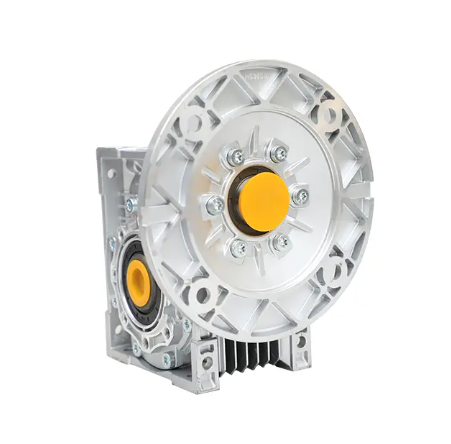
Industrial power-transmission terminology developed across different industries, countries, engineering disciplines, and equipment markets, so one universal naming convention is not always used. Gearbox is a broad term familiar to mechanical engineers because it describes the physical gear transmission enclosure. Gear reducer emphasizes the functional purpose and is particularly common when the equipment is used between a motor and a slower driven machine. Speed reducer is another common term used for exactly the same functional idea. Manufacturers may choose one term because it matches the language their customers commonly search for or use in RFQs. A product page may therefore use “worm gearbox,” “worm gear reducer,” and “worm speed reducer” for the same family of equipment. HUAKE's NMRV Worm Gear Units, for example, perform a speed-reduction function while also being described as worm gear units and gearbox-type transmission equipment. Gear motor creates another terminology layer because it refers to a motor and reducer assembled together. In some plants, maintenance personnel may still casually call the complete motor-and-reducer assembly a gearbox. This naming variation does not indicate poor technical practice as long as the product specifications clearly identify the function. Problems arise only when buyers compare names without comparing operating data. Procurement teams should therefore standardize their RFQs around technical parameters rather than demanding one specific naming convention.
There is no mandatory internal mechanical feature that separates every gearbox from every gear reducer. Both can contain the same gears, shafts, bearings, housings, seals, and lubrication systems. A helical gearbox and a helical gear reducer may therefore be mechanically identical if both use the same housing, gear train, ratio, and mounting arrangement. The functional direction of the ratio is what provides the clearest distinction. In a reducer, the input shaft normally rotates faster than the output shaft. The gear train converts this speed difference into increased output torque while losing a small amount of power through friction and other mechanical losses. A general gearbox does not necessarily have to follow that relationship because its design could increase speed or perform another transmission function. The same basic gearbox architecture can sometimes even be configured with different input and output arrangements depending on the machine. Gear geometry also does not determine whether a product should be called a gearbox or reducer because helical, bevel, worm, planetary, and cycloidal designs can all perform reduction. Housing material does not define the distinction either, since both terms can describe aluminum, cast-iron, or steel transmission units. Mounting method is also unrelated because foot-mounted, flange-mounted, shaft-mounted, and hollow-shaft units can all be reducers or broader gearbox systems. Engineers should therefore avoid looking for a physical component that universally differentiates the two terms. The practical difference is primarily functional and linguistic rather than a fixed construction rule.
A gear reducer increases usable output torque by exchanging rotational speed for mechanical turning force through its gear ratio. If a small input gear drives a larger output gear, the output gear completes fewer revolutions during the same period. The mechanical advantage created by this relationship allows the output shaft to deliver greater torque. In an ideal system, a 10:1 reduction would theoretically multiply the input torque by approximately ten. Real gear reducers are not perfectly efficient, so actual torque is reduced by friction in gear contacts, bearings, seals, and lubricant movement. Different gear technologies also have different efficiency characteristics because their tooth contact mechanisms vary. Helical and bevel gearing can provide efficient power transmission in many continuous-duty industrial applications. Worm reducers can provide high ratios within compact right-angle housings but may experience greater sliding losses depending on ratio and operating condition. Planetary and cycloidal units can provide high torque density through multiple simultaneous contact points. The rated output torque of the gearbox still limits how much load can be transmitted, so theoretical torque multiplication should never be used without checking manufacturer data. Shaft strength, bearings, thermal capacity, housing rigidity, and service factor all place practical limits on the drivetrain. A gear reducer therefore makes motor torque more useful at lower speed, but it does not create additional mechanical power.
| Parameter | Example |
|---|---|
| Motor Input Speed | 1,500 rpm |
| Reduction Ratio | 20:1 |
| Approximate Output Speed | 75 rpm |
| Motor Torque | 25 N·m |
| Ideal Torque Before Losses | 500 N·m |
| Actual Output Torque | Less than 500 N·m after losses |
A gear reducer is the mechanical transmission unit, while a gear motor combines the reducer with an electric motor into one drive package. This distinction is important during procurement because two quotations can appear similar while one includes a motor and the other supplies only the gearbox. An integrated gear motor can simplify installation because the motor flange, input coupling, reducer housing, and power rating are already matched. It can also reduce the number of separate components that machine builders need to source and assemble. HUAKE's R Series Gear Motor RF67 is an example of a coaxial helical geared drive supplied in configurations that combine the reduction mechanism with different motor arrangements. A separate reducer may be preferable when a machine builder already has a specified motor brand, servo motor, brake motor, explosion-proof motor, or other special drive. Standalone gearboxes can also simplify replacement when the motor and reducer have different expected service lives. Large industrial gearboxes are often installed separately from their motors and connected through flexible couplings. Precision automation systems may use separate servo motors with planetary or RV reducers to optimize inertia, torque, and control response. Buyers should therefore confirm whether the product designation includes the electric motor, motor adapter, input flange, coupling, and brake. Comparing only the gearbox frame or ratio without identifying the included components can produce misleading price comparisons. The most appropriate configuration depends on machine design, motor requirements, maintenance strategy, and installation space.
| Product | Components Included | Typical Use |
|---|---|---|
| Gear Reducer | Gear transmission only | Connected to separate motor or power source |
| Gear Motor | Motor + reducer | Integrated industrial drive |
| Servo Reducer | Precision reducer | Connected to servo motor |
| Industrial Gearbox | Heavy-duty gearbox | Often coupled to separate large motor |
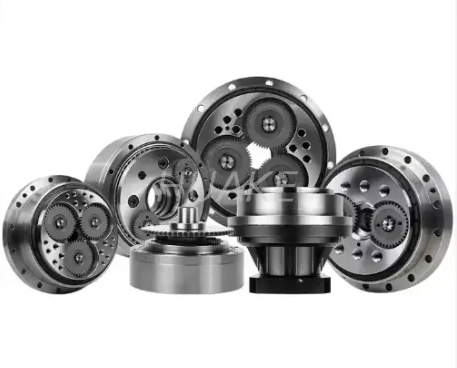
Most industrial gearbox technologies are used primarily as speed reducers when connected to motors. Helical gearboxes use angled gear teeth and are widely selected for conveyors, mixers, processing machinery, and continuous-duty equipment because they provide smooth transmission and good efficiency. Parallel-shaft helical reducers are useful when the machine requires high torque but has limited axial installation space. Bevel gearboxes redirect power through a right-angle arrangement and can combine directional change with efficient speed reduction. Worm gearboxes use a worm and worm wheel to provide compact right-angle transmission and relatively high ratios. Planetary gearboxes distribute torque among several planet gears, producing high torque density in a compact coaxial design. Cycloidal reducers use eccentric motion and multiple contact points to provide high ratios, shock resistance, and precision performance in selected applications. HUAKE's Precision RV Cycloidal Gear Reducer for Robot Joints represents a more specialized reducer used where compact high torque and precise motion are required. Cylindrical industrial gearboxes are commonly used for heavy-duty transmission in mining, metallurgy, material handling, and large processing equipment. Every one of these gearbox types can perform a gear-reduction function even though their mechanical structures differ significantly. The correct technology should therefore be chosen according to ratio, torque, shaft arrangement, duty, efficiency, precision, and space rather than simply whether the supplier calls it a gearbox or reducer.
Gearbox is usually the safer general term when discussing the complete enclosed transmission without emphasizing one particular output-speed relationship. Machine documentation may use gearbox when referring to the physical assembly that maintenance personnel inspect, lubricate, replace, or align. Heavy industrial machinery often uses the word gearbox because the equipment is viewed as a complete transmission system rather than only a speed reducer. A large HB-type industrial unit, for example, may be described as an industrial gearbox even though one of its primary functions is still speed reduction. Gearbox is also useful when the transmission changes shaft direction or contains several functional stages. Design discussions may refer to gearbox housing, gearbox oil, gearbox bearings, gearbox temperature, or gearbox vibration regardless of whether the ratio is reducing or increasing speed. Maintenance records also commonly use gearbox because technicians are concerned with the complete mechanical unit. When communicating with suppliers, however, gearbox alone may be too broad if the required reduction ratio is not specified. A quotation request should therefore identify input speed, required output speed, torque, and shaft configuration. The word can also describe automotive transmissions, machine-tool transmissions, wind-turbine gearboxes, and many other systems that differ significantly from industrial speed reducers. Context determines the meaning more than the term itself. Industrial buyers can use gearbox freely as long as the functional specifications remove ambiguity.
Gear reducer is more precise when the primary objective is to reduce motor speed and increase usable torque for industrial equipment. It immediately tells the supplier that the output speed should be lower than the input speed. This term is particularly useful during machine design because engineers can discuss motor speed, reduction ratio, and required output rpm clearly. Conveyor drives are a common example because the motor generally runs far faster than the conveyor pulley should rotate. Mixers, agitators, feeders, lifting systems, and material-handling equipment also commonly need speed reduction before the motor can drive the machine effectively. The term helps distinguish the transmission from speed increasers or other specialized gearboxes. It is also useful in technical content because users searching for “gear reducer” are often trying to solve a motor-to-machine speed and torque problem. Manufacturers may use speed reducer as an equivalent term. Gear reducer does not specify the internal gear technology, so the engineer must still choose between helical, worm, bevel, planetary, cycloidal, or another arrangement. It also does not identify whether the unit includes a motor. A complete specification should therefore use a phrase such as “parallel-shaft helical gear reducer, 25:1 ratio, 1,200 N·m output torque” rather than only “gear reducer.” Clear functional terminology reduces the risk of receiving technically unsuitable quotations.
The answer depends on the machine requirement rather than on the terminology. If an electric motor is turning faster than the driven machine should operate, the required transmission function is speed reduction. In that case, the equipment can correctly be described as either a reduction gearbox or gear reducer. The first selection step is calculating the approximate ratio from motor speed and required output speed. The next step is determining continuous and peak torque because the reducer must survive both normal operation and startup or shock loading. Shaft arrangement should then be selected from inline, parallel, or right-angle configurations according to the machine layout. Duty cycle is important because a gearbox running continuously faces different thermal conditions from one operating intermittently. Efficiency should be considered where motor power and annual operating hours make energy losses significant. Precision and backlash become important when the transmission is used on servo, robotic, indexing, or reversing machinery. Mounting arrangement, output shaft dimensions, motor interface, environmental conditions, and maintenance access also need to be specified. Buyers should then compare gearbox technologies capable of meeting those requirements rather than choosing one solely from price. The best product is the transmission that provides the correct ratio, torque, durability, efficiency, and mechanical integration regardless of whether its catalog heading uses gearbox or gear reducer.
| Requirement | Information to Provide |
|---|---|
| Motor Power | kW or HP |
| Input Speed | Normal and maximum rpm |
| Required Output Speed | Target machine rpm |
| Ratio | Approximate speed reduction |
| Continuous Torque | Normal operating load |
| Peak Torque | Startup, shock, or jam load |
| Operating Hours | Intermittent or continuous duty |
| Shaft Layout | Inline, parallel, or right-angle |
| Mounting | Foot, flange, hollow shaft, shaft-mounted |
| Precision | Acceptable backlash |
| Environment | Dust, moisture, chemicals, temperature |
| Motor Interface | Standard motor, servo, brake motor, other |
The product name itself has no effect on mechanical performance. A gearbox labeled “gear reducer” does not automatically have higher torque, better efficiency, or longer service life than one labeled simply “gearbox.” Performance comes from gear design, materials, manufacturing accuracy, heat treatment, bearings, lubrication, housing stiffness, seals, and correct application sizing. A helical gearbox with optimized tooth geometry may provide higher efficiency than a worm reducer under certain operating conditions, but the difference comes from the transmission mechanism rather than terminology. A precision planetary gearbox may have much lower backlash than a general-purpose industrial reducer because it was manufactured for motion-control applications. A large cylindrical gearbox may handle much greater load than a compact servo reducer because their design objectives are different. Ratio also influences the performance of the same gearbox family because additional gear stages can change efficiency, heat, dimensions, and torque capacity. Operating conditions affect actual life just as strongly as catalog ratings. Misalignment, overloading, insufficient lubrication, high ambient temperature, and excessive external shaft loads can shorten service life even when the gearbox is correctly named and well manufactured. Buyers should therefore read technical specifications rather than using terms such as gearbox, reducer, heavy-duty, or precision as substitutes for engineering data. The name helps describe the product category, but it does not replace model-specific performance information.
One frequent mistake is assuming that a gearbox and gear reducer must be different products and therefore requesting two separate quotations for essentially the same transmission requirement. Another mistake is comparing gearbox prices without checking whether one quotation includes a motor while another supplies only the reducer. Buyers also sometimes compare the same nominal ratio without verifying rated output torque, service factor, thermal capacity, or mounting configuration. A 30:1 ratio alone does not determine whether the gearbox can drive the machine reliably. Motor power is also insufficient by itself because the same motor can experience very different loads depending on the driven equipment. Peak torque is often overlooked, particularly on conveyors, crushers, mixers, and equipment that starts under load. Output shaft dimensions can create integration problems when the selected gearbox does not match the existing coupling, pulley, or machine frame. Mounting position can influence lubrication and therefore should be confirmed before ordering. Precision applications can suffer when procurement teams compare only torque and ratio without specifying backlash. Environment is another source of mistakes because dust, moisture, chemicals, and high temperatures can change seal, housing, lubricant, and protection requirements. A technically useful RFQ should therefore describe the machine duty rather than rely on a short phrase such as “need a gearbox.” Better application data produces more comparable quotations and reduces the risk of costly redesign after delivery.
HUAKE's product range reflects the way both terms are commonly used across the industrial transmission market. The company supplies helical gear reducers, bevel gear reducers, planetary gear reducers, worm gear reducers, cycloidal gear reducers, cylindrical gear reducers, gear motors, and other transmission products. Some individual product descriptions use the word gearbox because the product is recognized in the market under that terminology. Others use reducer because the main application is reducing speed and increasing output torque. Gear motor products combine the motor and reduction transmission into one package. Precision products such as RV cycloidal and planetary reducers focus more heavily on backlash, rigidity, torque density, and positioning performance. Industrial helical and cylindrical products focus more on continuous power transmission, load capacity, and durability. Worm gearbox products emphasize compact right-angle transmission and ratio flexibility. This terminology allows buyers from different industries to locate the equipment using the terms they already use in their own engineering documents. The important step is matching the product configuration to actual operating data. HUAKE should therefore be provided with motor power, input speed, required output rpm, torque, mounting orientation, shaft configuration, application, duty cycle, and environmental conditions when a customer requests model selection. For replacement projects, existing gearbox model numbers, dimensions, shaft sizes, and installation photographs can also help determine compatibility. Whether the final product is called a gearbox or gear reducer is secondary to selecting the correct transmission configuration for the machine.
HUAKE provides multiple transmission architectures rather than limiting customers to one reducer technology. This is useful because the most appropriate gearbox depends heavily on the operating requirement. Parallel-shaft helical reducers can support efficient continuous-duty transmission where high torque and compact installation are needed. R Series coaxial helical gear motors can be used where inline transmission and integrated motor configurations are preferred. Worm reducers provide compact right-angle transmission and broad ratio options for general industrial machinery. Bevel reducers offer another right-angle solution where efficiency and continuous operation are important. Planetary reducers can address compact high-torque and servo transmission applications. RV cycloidal reducers extend the product range into precision robotic and automation systems. Cylindrical and heavy industrial gearbox designs can support larger machinery where structural load capacity and long operating hours are major considerations. HUAKE also provides different motor combinations, mounting configurations, input methods, and output arrangements across its transmission product families. This range allows buyers to compare several drivetrain concepts against the same machine requirement rather than selecting a reducer only because it is familiar. Complete technical information should still be supplied because gearbox selection cannot be performed reliably from industry name or motor power alone. An application-based approach provides a better match between ratio, torque, efficiency, precision, durability, and installation requirements.
The difference between a gearbox and a gear reducer is primarily one of terminology and functional scope. A gearbox is a broad mechanical transmission system containing gears and related components inside a housing. A gear reducer is a gearbox specifically used to reduce rotational speed and increase usable output torque. In most industrial motor-driven applications, the gearbox performs exactly that reduction function, so the two terms are commonly used interchangeably. A helical gearbox can therefore also be a helical gear reducer. A worm gearbox is normally a worm reducer when it reduces motor speed. Planetary and cycloidal gearboxes used behind servo motors are also reducers when their output speed is lower than the input speed. The term gear motor refers to a motor and reducer supplied as one integrated drive rather than to a completely different transmission principle. Buyers should therefore focus less on the product name and more on input speed, output speed, ratio, continuous torque, peak torque, efficiency, service factor, mounting, shaft arrangement, and precision. Technical quotations should also state clearly whether the motor is included. Comparing complete operating data prevents confusion when different suppliers use different terminology. HUAKE offers several gearbox and reducer technologies that can be selected according to industrial power-transmission requirements. The correct product is ultimately the unit that provides the required mechanical performance and installation configuration, regardless of whether the catalog calls it a gearbox, gear reducer, or speed reducer.
A gearbox and a gear reducer are often the same physical type of equipment in industrial applications. Gearbox is the broader term for an enclosed gear transmission. Gear reducer describes a gearbox whose main function is reducing rotational speed. Most motor-driven industrial gearboxes reduce speed, so engineers often use both terms interchangeably. The internal components can be exactly the same. Both may contain gears, shafts, bearings, seals, and lubricant. A helical gearbox can therefore also be called a helical gear reducer. The distinction matters when a gearbox performs another function such as increasing speed. In that case, calling it a reducer would not be technically accurate. Buyers should check ratio and output speed rather than relying only on the terminology. Complete operating specifications remove most naming ambiguity.
Yes, a gearbox can theoretically be designed to increase speed. This is one reason gearbox is a broader term than gear reducer. A gear reducer specifically produces lower output speed than input speed. A speed-increasing gearbox reverses that relationship. The output rotates faster while available output torque generally decreases accordingly. Specialized machinery can use speed-increasing gearboxes where a high-speed driven component must be powered from a slower input. However, most common industrial motor-to-machine gearboxes are used for reduction. Electric motors often operate faster than conveyors, mixers, feeders, and processing equipment require. Speed reducers therefore represent a very large portion of industrial gearbox applications. Gear ratio should always be checked to confirm the actual function. The term gearbox alone does not tell the buyer whether speed goes up or down.
A gearbox is the mechanical gear transmission, while a gear motor combines that gearbox or reducer with an electric motor. The motor supplies the rotational power. The reducer changes the speed and torque before the power reaches the machine. Integrated gear motors can simplify equipment design because the motor and reducer interfaces are matched. They are common on conveyors, mixers, packaging equipment, and automated production lines. A standalone gearbox can instead be connected to a separately selected motor. This provides greater flexibility when a special motor is required. Servo systems often use separate motors and precision reducers. Large industrial gearboxes may also be coupled to motors independently. Buyers should confirm whether a quotation includes the motor before comparing prices. The words gearbox and gear motor should therefore not be used as direct synonyms.
In most industrial contexts, yes. Both terms describe a mechanical transmission that reduces input rotational speed and increases usable output torque. Speed reducer emphasizes the reduction in rpm. Gear reducer emphasizes that the speed change is achieved through gearing. Industrial products may be marketed under either name. Helical, worm, bevel, planetary, cycloidal, and cylindrical designs can all function as speed reducers. The terminology does not determine the exact internal gear structure. It also does not determine whether a motor is included. Buyers should still specify the required ratio, torque, shaft arrangement, and mounting. Service factor and duty cycle should also be included. When these technical parameters are clear, using either term normally creates little confusion.
Neither term describes an inherently better product. A gear reducer is simply a gearbox used for speed reduction. Mechanical quality depends on gear geometry, materials, manufacturing accuracy, bearings, lubrication, housing design, and correct sizing. A gearbox that is poorly matched to the machine can fail even if it is technically high quality. A correctly selected reducer can provide long service life when it operates within its rated conditions. The application should therefore determine the design. Continuous conveyors may favor efficient helical gearing. Compact right-angle systems may use worm or bevel reducers. Servo applications may require planetary gearboxes. Robotic joints may use precision cycloidal reducers. The better transmission is the one that meets the actual ratio, torque, precision, efficiency, and installation requirements.
Start with the speed of the motor or other input source. Then determine the desired operating speed of the driven machine. Divide the input speed by the required output speed to estimate the reduction ratio. A 1,500 rpm motor driving equipment at approximately 50 rpm requires a theoretical ratio of about 30:1. Standard gearbox ratios may differ slightly from the calculated value. The resulting output speed should therefore be checked against the acceptable process range. Torque also needs to be calculated because ratio alone is not enough for selection. Gearbox efficiency reduces the theoretical torque available at the output. Peak and startup loads should be included. A variable-frequency drive may provide additional speed adjustment where appropriate. Final selection should use manufacturer torque, speed, thermal, and service-factor data.
Provide the motor power and normal input speed first. State the required output speed or target reduction ratio. Include the continuous output torque when it is known. Describe startup loads, impact loads, or machine jams that can create higher peak torque. Identify the driven equipment, such as a conveyor, mixer, lifting system, robot, or processing machine. State daily operating hours and whether the machine operates continuously or intermittently. Provide the required shaft arrangement and mounting position. Include output shaft dimensions when the reducer must fit existing equipment. State whether low backlash is required. Describe dust, moisture, chemicals, ambient temperature, or other environmental conditions. For replacement projects, the current gearbox model and installation dimensions are also useful. Complete application data allows HUAKE to compare suitable gearbox families more accurately.


