
- All
- Product Name
- Product Keyword
- Product Model
- Product Summary
- Product Description
- Multi Field Search


Views: 0 Author: Site Editor Publish Time: 2026-11-07 Origin: Site


Why do some gear reducers operate more quietly than others? The answer often lies in their gear design and tooth contact. A hyperboloid reducer uses an offset-axis gear arrangement to transfer power smoothly. This article explores how gear geometry, lubrication, and manufacturing accuracy affect noise. You will also learn how to select a quieter reducer for your application.
A hyperboloid reducer can achieve quieter operation through its gear geometry and meshing characteristics. Its offset shaft arrangement allows a different contact pattern from conventional intersecting-axis bevel gears.
The actual noise level depends on the complete transmission design. Gear accuracy, bearing support, lubrication, and housing rigidity all influence the final result.
A hyperboloid gear transmission uses two gear axes that are offset. They do not intersect, and they are not parallel. This arrangement changes the tooth contact geometry.
The pinion can use a different diameter and helix angle. This creates opportunities for improved tooth strength and a larger contact area, depending on the design.
Suitable geometry helps distribute motion across the meshing surfaces. It can also reduce sudden engagement changes, supporting smoother power transmission and lower vibration.
Gear teeth transfer power through repeated engagement. Sudden contact changes can create small impacts, which generate vibration and audible noise.
A well-designed hyperboloid reducer supports progressive tooth engagement. Its contact pattern helps maintain more consistent force transmission during rotation.
However, continuous contact alone does not guarantee quiet operation. Tooth accuracy, assembly clearance, and operating conditions must also remain controlled.
When a gearbox transmits torque, its gear teeth experience contact forces. Uneven force distribution can concentrate stress on specific areas.
A suitable tooth contact pattern helps spread these forces. This reduces the risk of localized stress and unstable engagement during operation.
If contact becomes uneven, the gearbox may produce additional vibration. Correct gear alignment and suitable load capacity help maintain stable transmission.
Friction occurs when gear teeth move against each other. Excessive friction generates heat and can increase wear during continuous operation.
The hyperboloid gear meshing arrangement can provide favorable contact conditions. Its sliding and rolling characteristics depend on the specific tooth geometry.
Proper lubrication remains essential for controlling friction. It also protects tooth surfaces and supports stable transmission performance.
Gear geometry must match the intended design. Errors in tooth profiles can create uneven contact and repeated transmission disturbances.
Accurate machining helps maintain consistent tooth engagement. Suitable surface finishing also reduces rough contact and supports stable operation.
Assembly accuracy matters just as much. Incorrect positioning can change contact patterns, increase vibration, and create unnecessary operating noise.
The housing supports bearings, shafts, and internal transmission components. Its structural rigidity influences how mechanical vibration travels through the gearbox.
A stable housing helps maintain bearing positions. It also supports consistent gear engagement under changing operating loads.
Housing material and construction affect vibration behavior. Buyers should evaluate the complete structure rather than judging noise performance by gear geometry alone.
Tip: Ask suppliers for gear contact inspection records and noise test conditions. These details help verify actual transmission performance.
Gear geometry is only one part of gearbox performance. Bearings, lubrication, surface treatment, and housing design also influence operating stability.
A well-designed hyperboloid reducer combines these features to support reliable power transmission. Each component must work correctly under the intended operating conditions.
Gear teeth experience repeated contact during operation. Their surface hardness affects resistance to wear and surface damage.
Heat treatment can improve the hardness of gear tooth surfaces. It helps maintain tooth geometry under suitable loads and operating conditions.
However, hardened teeth do not automatically produce lower noise. Tooth profile accuracy, surface finish, and proper lubrication remain equally important.
Bearings support rotating shafts and maintain their operating positions. Their clearance and installation accuracy influence gear engagement.
Excessive bearing clearance can allow unwanted shaft movement. Incorrect preload can also increase friction and operating temperature.
A suitable bearing arrangement helps maintain stable shaft alignment. It also supports consistent tooth contact during continuous operation.
Lubrication reduces direct contact between moving surfaces. It protects gear teeth and bearings from excessive friction and wear.
The lubricant must match the gearbox design. Its viscosity should suit the operating speed, temperature, and load conditions.
Insufficient oil can increase friction and noise. Excessive oil may also cause additional churning losses and heat generation.
Tip: Confirm the recommended lubricant grade and filling quantity before commissioning. Follow the gearbox manufacturer's maintenance instructions.
The housing protects internal transmission components. It also supports bearings and helps maintain shaft positions.
Some hyperboloid reducer designs use aluminum alloy housings. Others use different materials according to structural and application requirements.
Aluminum alloy can reduce overall equipment weight. However, housing rigidity, mounting strength, and thermal behavior still require evaluation.
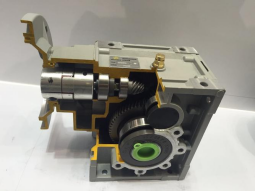
Different gearbox structures produce different transmission characteristics. Their noise performance depends on gear geometry, manufacturing accuracy, and operating conditions.
A hyperboloid reducer is not automatically quieter than every alternative. Buyers should compare actual specifications and test results before selecting equipment.
Worm reducers use a worm and worm wheel to transmit power. Their engagement involves considerable sliding contact between mating surfaces.
A hyperboloid reducer uses a different gear arrangement. Its tooth contact characteristics can support lower sliding losses under suitable conditions.
Worm reducers remain useful for many industrial applications. The better option depends on torque, speed, efficiency, installation space, and noise requirements.
Helical reducers use angled teeth to create progressive engagement. This design supports smooth transmission under suitable operating conditions.
A hyperboloid reducer also uses angled tooth geometry. However, its offset shaft arrangement creates different contact and transmission characteristics.
The selection depends on the equipment layout. Buyers should compare output torque, reduction ratio, mounting position, and measured noise levels.
Conventional bevel gears transmit power between intersecting shafts. They are commonly used in right-angle transmission systems.
Hypoid gears use offset shaft arrangements. This changes their tooth geometry and contact characteristics compared with conventional bevel gears.
Both designs can serve right-angle drive applications. Their suitability depends on load requirements, installation dimensions, efficiency, and noise specifications.
Gearbox Type | Transmission Characteristics | Noise Considerations |
|---|---|---|
Hyperboloid reducer | Offset-axis gear transmission | Depends on tooth geometry and contact |
Worm reducer | Sliding gear engagement | Friction and lubrication influence noise |
Helical reducer | Progressive tooth engagement | Smooth engagement under suitable conditions |
Bevel reducer | Intersecting-axis transmission | Depends on gear accuracy and assembly |
Note: Compare gearboxes under consistent speeds and loads. Different testing conditions can produce misleading noise comparisons.
A quiet transmission system can improve equipment operation. It is particularly useful where machinery runs near operators or operates for extended periods.
The application must match the reducer's rated specifications. Torque, speed, mounting arrangement, and environmental conditions remain important selection factors.
Agricultural machinery often operates under changing loads. Its transmission systems must handle repeated starting and demanding working conditions.
A hyperboloid reducer can support compact power transmission. Its offset shaft arrangement may also provide useful installation flexibility.
Noise performance matters during extended equipment operation. Buyers should still confirm torque capacity, sealing, and environmental suitability.
Food processing lines often contain conveyors, mixers, and packaging machines. These systems may operate continuously throughout production shifts.
A low-noise speed reducer can support a more comfortable working environment. Stable transmission also helps maintain consistent equipment operation.
Buyers should consider cleaning requirements and operating conditions. Lubricant selection, sealing, and material compatibility also require attention.
Automated equipment often has limited installation space. Compact reducers can help simplify mechanical integration.
A suitable hyperboloid gearbox can provide right-angle power transmission. This may help designers arrange motors and driven components efficiently.
Noise and vibration also affect nearby equipment. Engineers should evaluate the complete drive system, including motors, couplings, and mounting structures.
Some industrial machines operate near inspection stations or work areas. Excessive transmission noise can reduce workplace comfort.
A quieter reducer may help control one source of equipment noise. Its actual contribution depends on the complete machine design.
Buyers should also inspect other noise sources. Motors, fans, bearings, and driven equipment can contribute significantly to overall sound levels.
Tip: Evaluate noise at the operator's actual working position. Gearbox noise alone does not represent total machine noise.
Even a well-designed gearbox can become noisy under unsuitable conditions. Installation errors, incorrect lubrication, and excessive loads can affect transmission performance.
Understanding these factors helps maintenance teams identify problems early. It also prevents buyers from incorrectly treating every noise issue as a manufacturing defect.
Lubricant viscosity affects the oil film between moving surfaces. Unsuitable oil may increase friction and accelerate component wear.
Insufficient oil can prevent proper lubrication. This may cause abnormal gear noise, bearing noise, and rising operating temperatures.
Excessive oil can also increase churning losses. Always follow the recommended lubricant grade and filling level.
Incorrect alignment can place additional loads on gearbox shafts. These forces may affect bearing performance and gear contact.
Loose mounting bolts can also create vibration. An unstable foundation may amplify noise during operation.
Check coupling alignment before commissioning. Confirm mounting dimensions and installation positions against the technical drawings.
Every reducer has rated operating limits. Excessive torque can increase tooth contact stress and mechanical vibration.
High rotational speeds may also increase gear meshing noise. Frequent starting and stopping can create additional mechanical stress.
Select the reducer according to actual working conditions. Consider starting torque, peak loads, and operating hours.
Gear teeth experience repeated mechanical contact. Poor lubrication and excessive loading can accelerate surface deterioration.
Damaged bearings may produce humming, clicking, or grinding sounds. Changes in bearing clearance can also affect gear engagement.
Regular inspections help identify developing problems. Investigate sudden noise changes before they cause further mechanical damage.
Note: Stop operation if severe grinding or knocking occurs. Follow manufacturer guidance before opening the gearbox.
Noise performance should never be the only purchasing criterion. Buyers must consider transmission requirements, mechanical compatibility, and long-term operating conditions.
A suitable reducer should meet the equipment's power and torque requirements. It should also fit the installation layout and maintenance plan.
First, confirm the actual gear transmission structure. Ask whether the product uses hypoid gearing or another arrangement.
Next, review rated power, output torque, and reduction ratio. These specifications determine whether the reducer suits the application.
Also check input speed and output shaft dimensions. They must match the motor and driven equipment.
Request available noise test reports from the supplier. Check whether the measurements cover no-load or loaded operation.
Confirm the testing speed and measurement distance. Ambient noise and installation conditions can influence readings.
Vibration data can provide additional information. Compare results using consistent measurement methods and operating conditions.
Ask about gear machining accuracy and surface treatment. These factors influence tooth engagement and wear resistance.
Review bearing arrangements and assembly procedures. Consistent manufacturing quality supports stable transmission performance.
Also confirm lubrication recommendations and sealing arrangements. They should match the intended operating environment.
Check mounting dimensions and shaft configurations before ordering. Confirm that the reducer fits the available installation space.
Evaluate operating temperature, dust exposure, and moisture conditions. These factors influence material selection and sealing requirements.
Finally, request technical drawings and product documentation. Clear specifications help reduce installation problems and purchasing risks.
Tip: Send suppliers your motor power, input speed, required output speed, torque, and installation drawings. This makes technical selection more accurate.
A hyperboloid reducer can run quietly through suitable gear geometry, stable tooth contact, and controlled friction. Manufacturing accuracy, lubrication, bearings, and housing design also influence its performance.
For industrial applications, HUAKE offers TKM and TKB hyperboloid reducer options. Buyers can evaluate their transmission structure and specifications for suitable equipment applications.
Choosing the right reducer requires checking actual operating conditions and technical data. Proper installation and maintenance further support stable, low-noise operation.
A: Its gear geometry supports smooth engagement and suitable load distribution.
A: Some designs exceed 90%, but verify model-specific test data.
A: Poor lubrication, misalignment, excessive loads, and gear wear.
A: It can be, depending on gear design and operating conditions.
A: Compare noise reports, torque ratings, gear accuracy, and mounting requirements.


