
- All
- Product Name
- Product Keyword
- Product Model
- Product Summary
- Product Description
- Multi Field Search


Views: 0 Author: Site Editor Publish Time: 2026-01-16 Origin: Site


You use a worm gear reducer to control speed and boost torque in machines. This device features two main parts: a worm shaft, shaped like a screw, and a worm wheel, which looks like a helical gear. When the worm gear drive turns, it meshes with the wheel to achieve high reduction ratios and prevent back-driving. Many industries rely on worm gear reducers for power transmission in heavy-duty applications. Worm speed reducers and worm gearboxes offer compact design and let you transmit motion at right angles, making them popular choices for single reduction worm gear reducers and double reduction worm gear reducers.
Worm gear reducers control speed and increase torque, making them essential for heavy-duty machinery.
The self-locking feature of worm gearboxes enhances safety by preventing reverse movement, ideal for lifts and hoists.
Regular maintenance, including lubrication checks, extends the life of worm gear reducers and prevents costly breakdowns.
Choosing the right gear ratio is crucial; higher ratios suit heavy loads, while lower ratios are better for precision tasks.
Worm gear reducers are compact and efficient, fitting well in tight spaces and providing reliable power transmission.
When you look inside a worm gear reducer, you find several key parts that work together to control speed and torque. Each component has a special job to keep the system running smoothly.
The worm shaft looks like a screw and connects to the input motor. It transfers motion into the gearbox. Manufacturers use different materials for worm shafts to match the needs of each application. Here is a table showing common materials and their benefits:
Material | Application Requirements |
|---|---|
Hardened Steel | High load capacity and wear resistance |
Stainless Steel | Preferred in corrosive environments |
Alloy Steels | Enhanced mechanical properties for heavy-duty applications |
You get strength, durability, and resistance to wear and corrosion from these materials. High-grade steel alloys provide the strength and wear resistance you need. Carbon steel variants offer good machinability and cost savings. Alloy steels with chromium, nickel, or molybdenum perform well under tough conditions.
The worm wheel is a round gear with teeth that mesh with the worm shaft. This part receives the motion and turns it at a right angle. The design of the wheel affects how well your worm gear reducer works. For example, a concave profile flank form helps create a better lubricant film, which reduces power loss. If you use copper-tin bronze for the wheel and pair it with a case-hardened worm, you get higher efficiency and less wear.
The housing holds all the parts in place and protects them from dust and damage. Bearings support the shafts and help them spin smoothly. If you size your worm gear reducer correctly for your application, you reduce wear and tear. Too much load can cause heat, which breaks down the lubricant and stresses the gears and bearings. Over time, repeated heavy loads can cause small cracks and even failure.
A good lubrication system keeps everything running smoothly. You can use compounded gear oils for general use because they prevent sliding wear. Extreme pressure (EP) gear oils work well when you have high pressure and shock loads. Synthetic worm gear oils, like polyalphaolefins and polyalkylene glycols, stay stable in different temperatures and mix well with mineral oils. These oils help your worm gear reducer last longer and work better.
Tip: Always check the lubrication level and type to keep your worm gear reducer in top shape.
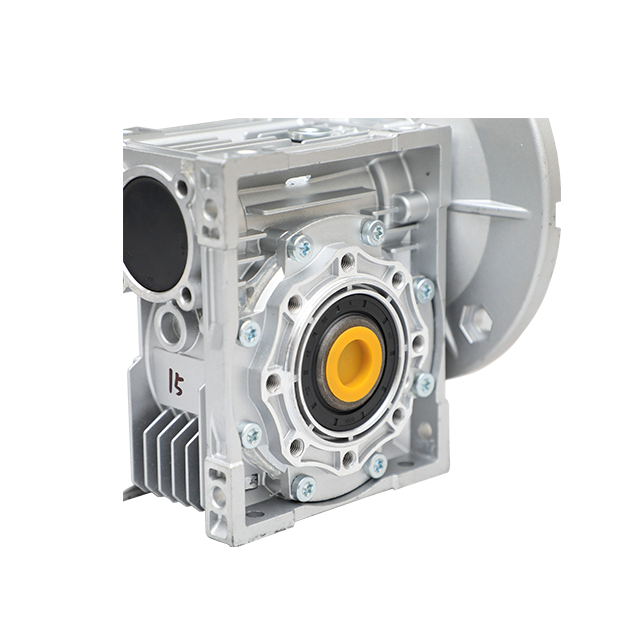
Understanding the working principle of a worm gearbox helps you see why it is so effective in many mechanical systems. You find worm gearboxes in conveyor systems, industrial machinery, and even automotive applications. The operating principle relies on the unique interaction between the worm shaft and the worm wheel inside the gearbox.
When you power the worm shaft with a motor, its spiral shape engages the teeth of the worm wheel. This action causes the worm wheel to rotate at a much slower speed than the worm shaft. The worm gearbox uses this mechanism to achieve large speed reduction. You can control the output speed precisely, which is important for machines that need slow and steady movement.
The speed reduction ratio depends on the number of teeth on the worm wheel and the threads on the worm shaft. For example, if the worm has one thread and the wheel has 40 teeth, the reduction ratio is 40:1. This means the worm wheel turns once for every 40 turns of the worm shaft. Many industrial worm gearboxes offer reduction ratios from 40:1 up to 100:1 or higher. You can see typical ratios in the table below:
Reduction Ratio | Description |
|---|---|
100-1 | Commonly offered with one worm and gear pair |
40-1 and higher | Typically resistant to back-driving, beneficial in some applications |
You get reliable speed reduction and smooth operation from a worm gear speed reducer. This makes worm gearboxes ideal for applications where you need to slow down a motor and increase control.
As the worm gearbox reduces speed, it also increases torque. You need high torque for lifting, pulling, or moving heavy loads. The gearbox converts the fast rotation of the worm shaft into slow, powerful movement at the worm wheel. This is why you see worm gearboxes in cranes, winches, and elevators.
Worm gearboxes achieve high torque output by using large speed reduction ratios.
You benefit from strong force at low speeds, which is perfect for heavy-duty tasks.
Worm gearboxes are suitable for industrial and mechanical fields that require large torque output.
You find worm gearboxes in right angle worm gear reducer designs, which allow you to transmit power at a 90-degree angle.
Worm gear speed reducers are compact and efficient for applications needing high torque and low speed.
Although worm gearboxes produce less torque than some other gear systems, such as hypoid gearmotors, they remain popular for their ability to deliver reliable high torque in compact spaces.
One special feature of a worm gearbox is its self-locking ability. When you use a worm gearbox with a high reduction ratio, the design prevents the worm wheel from turning the worm shaft in reverse. This means the output shaft stays in place unless you apply power to the input.
The self-locking feature comes from the large spiral angle of the worm under load.
Tooth profile and friction force also play a role in self-locking.
The self-locking condition requires the helix angle of the worm to be less than the friction angle at the contact surface.
You usually see self-locking in worm gearboxes with reduction ratios greater than 40:1.
Note: Self-locking does not always work. If the coefficient of friction is lower than the tangent of the worm's lead angle, or if the rotational speed increases, the self-locking effect can weaken. External vibrations may also affect this property.
You rely on the self-locking feature in applications where safety is important, such as lifts and hoists. The worm gearbox keeps loads from slipping or moving when the motor is off.
You gain several important benefits when you use a worm reducer gearbox in your machinery. These gearboxes deliver high torque capabilities and allow for significant speed reduction, which means you can move heavy loads with less effort. The worm gearbox design provides a space efficient design, making it easy to fit into tight spaces. You often see worm gear reducers in conveyor systems, automotive steering, and robotics because their compact structure supports right-angle power transmission.
High torque output and greater speed reduction help you control heavy-duty equipment.
The self-locking feature keeps loads in place, improving safety in vertical applications.
Low noise levels make worm reducer gearbox ideal for noise-sensitive environments.
The simple construction of worm gear reducers leads to dependable operation and less maintenance.
You can repair a worm gearbox easily, which saves time and money.
The compact size allows you to use smaller motors while still achieving high torque.
Worm gearboxes work well in right angle worm gear reducer setups, transferring motion at 90 degrees.
Their versatility means you can use them in many industries, from automotive to household appliances.
Tip: If you need a gearbox for a space-constrained area, consider a worm gear speed reducer for its compact and efficient design.
While worm reducer gearbox offers many advantages, you should also consider some limitations. Worm gear reducers typically have lower efficiency compared to other gear types. The average efficiency of a worm gearbox is around 65%, which means more energy turns into heat instead of useful work. This heat can cause problems if you do not manage it properly.
Cause of Heat Generation and Wear | Description |
|---|---|
Material Mismatches | Using non-ferrous worm gears with steel worms increases heat. |
Lubrication Issues | Poor lubricant choice or low levels raise friction and temperature. |
Operational Factors | Overloading and misalignment speed up wear and heat buildup. |
Sliding friction during gear meshing raises temperature, which can thin the oil and lead to leaks.
Overheating may result from misalignment, overload, or inadequate lubrication.
Worm reducer gearbox may wear faster if you select the wrong type or assemble it poorly.
Lower efficiency means higher operational costs over time, especially in industrial settings.
Worm gear reducers are less cost-effective than spur or helical gearboxes due to efficiency loss and heat generation.
Note: Regular maintenance and proper selection help you reduce wear and improve the high efficiency of your worm gearbox.
You often see worm gearbox units in industrial applications where you need reliable power transmission and precise control. Worm gear reducers play a key role in lifting and hoisting equipment, mining and metallurgical machinery, valve actuators, and automation systems. These gearboxes help you move heavy loads safely and efficiently. You benefit from the self-locking feature, which keeps machinery stable during operation. Many factories use worm gearboxes for specialized tasks because they offer high torque and compact design.
Lifting and hoisting equipment
Mining and metallurgical equipment
Valve actuators
Automation and specialized machinery
Tip: You can choose a right angle worm gear reducer for machines that require motion at a 90-degree angle.
Worm gearbox units are popular in conveyor systems. You get steady movement and high torque at low speeds, which is ideal for packaging and material handling. The self-locking feature prevents backward rolling, so your conveyor stays safe and reliable. Worm gear motors have proven their reliability in harsh environments. For example, a solar farm in California used worm gear motors with a 300:1 reduction and saw a 30% drop in maintenance costs.
Advantage | Description |
|---|---|
Exceptional Cost-to-Torque Ratio | Worm gear reducers provide more input shaft rotations per output shaft rotations, offering high torque at a lower cost. |
Backup Braking | They act as backup brakes, preventing sudden load release, which is crucial for safety in lifting applications. |
Fewer Moving Parts | The simplicity of worm gear designs reduces the chances of failure due to fewer components. |
Flexible Mounting Choices | The 90-degree angle of the gear allows for versatile engineering designs and the use of hollow shafts. |
Lower Noise Levels | Worm gears operate more quietly due to the sliding contact of gear teeth, minimizing ambient noise. |
You can rely on worm gear speed reducers for conveyor systems in warehouses, factories, and distribution centers.
You find worm gearbox units in automotive steering mechanisms and lifts. These gearboxes transfer high torque within a compact housing, which fits well in limited spaces. The mechanical self-locking feature prevents unintended wheel movement, improving safety. You experience smooth, progressive motion, which enhances driver control and comfort.
Worm gears provide precise control and smooth operation in steering mechanisms.
Their high torque transmission capability allows for effortless steering, especially in heavy vehicles.
The compact design of worm gears fits well within limited spaces in automotive systems.
Worm gearboxes are integral to power steering systems. The self-locking feature stabilizes steering, even when the engine is off.
Worm gear reducers serve many other purposes. You see them in escalators, lifts, packaging machines, and robotics. These gearboxes offer reliable performance in applications that require slow, controlled movement and high torque. You can select metric worm gear reducers for international projects or choose a worm gear speed reducer for specialized tasks. Worm gearboxes support a wide range of industrial applications, making them a versatile choice for engineers and technicians.
Note: You should always match the gearbox type to your specific needs for best results.
You can extend the life of your worm gearbox by following a regular maintenance routine. Start with visual inspections and vibration checks to spot early signs of wear or misalignment. Use the correct lubricant, keep it at the right level, and change it on schedule. Make sure the gearbox stays aligned and securely mounted. Monitor the operating temperature and keep any cooling systems in good condition. Replace worn parts with genuine components. Clean the outside of the gearbox often, and perform internal cleaning during major maintenance.
Here is a simple maintenance checklist:
Inspect for wear, leaks, and unusual noise.
Check and change lubricant as needed.
Confirm alignment and secure mounting.
Monitor temperature during operation.
Replace worn or damaged parts.
Clean the gearbox inside and out.
Tip: Regular maintenance helps prevent costly breakdowns and keeps your equipment running smoothly.
Lubrication is especially important. The table below shows how often you should check or replace the oil:
Condition | Lubrication Interval |
|---|---|
Normal Conditions | Every 3,000–5,000 hours or 6–12 months |
Harsh Environments | Every 3 months |
If you use your gearbox in tough conditions, change the oil more often. Always follow the manufacturer's guidelines for oil type and schedule.
Selecting the right worm gear reducer for your application requires careful planning. You need to match the load and power requirements to avoid failure. Consider the gear ratio, as it affects both speed and torque. Higher ratios work well for heavy loads, such as cranes, while lower ratios suit precision tasks like robotics.
Key Factor | Description |
|---|---|
Load and Power Requirements | Check the power and torque needed for your machine. |
Gear Ratios | Choose a ratio that gives the speed and torque you want. |
Efficiency and Heat | Look for efficient designs and plan for heat management. |
Materials and Construction | Pick strong, durable materials for long life. |
Installation and Maintenance | Make sure you can mount and service the reducer easily. |
Environmental factors also matter. Dispose of waste materials properly to protect the environment. Follow local rules and recycle parts when possible. Some non-metal parts may contain hazardous substances and need special handling.
Note: Careful selection and regular maintenance help you get the best performance and longest life from your worm gearbox.
You use worm gear reducers to achieve high reduction ratios, compact design, and reliable self-locking for safe and precise movement. The table below highlights their main features:
Feature | Description |
|---|---|
High Reduction Ratios | Significant speed reduction in one stage |
Compact Design | Fits in tight spaces |
Self-Locking | Prevents reverse movement for safety |
Durability | Strong materials for long life |
Understanding how each part works and why maintenance matters helps you prevent wear and overheating. To keep your equipment running smoothly, inspect regularly, check lubrication, and monitor alignment and temperature. You can find detailed guidance in manufacturer manuals and maintenance articles.
You use Worm Gear Reducers to lower speed and boost torque in machines. These devices help you control heavy loads safely. You often see them in conveyor systems, lifts, and industrial equipment.
Metric worm gear reducers use metric measurements for gears and shafts. You choose these when your machinery follows international standards. They fit easily with other metric components and simplify global projects.
Yes! A right angle worm gear reducer lets you transmit power at a 90-degree angle. You can fit these gearboxes into tight spaces. This design works well in compact machines and conveyor systems.
Lubrication keeps your worm gear speed reducer running smoothly. It reduces friction and prevents wear. You should check oil levels often to avoid overheating and damage.
Many Worm Gear Reducers have a self-locking feature. This means the output shaft will not move unless you power the input. You get extra safety in lifts, hoists, and other heavy-duty applications.


