
- All
- Product Name
- Product Keyword
- Product Model
- Product Summary
- Product Description
- Multi Field Search


Views: 0 Author: Site Editor Publish Time: 2026-01-14 Origin: Site


You rely on worm gear reducers when you need to decrease speed and boost torque in your machinery. A worm gear reducer uses a worm and a worm wheel to convert rotational motion, often achieving significant reduction ratios and high torque output. This type of gearbox often prevents reverse motion, which improves safety. Understanding how these components interact helps you choose the right solution for your application and maintain reliable performance.
Worm gear reducers are essential for reducing speed and increasing torque in machinery, making them ideal for heavy-duty applications.
The unique self-locking feature of worm gear reducers enhances safety by preventing reverse motion, crucial for applications like lifts and cranes.
Choosing the right materials, such as hardened steel and bronze, improves the durability and efficiency of worm gear reducers.
Regular maintenance, including oil changes and inspections, is vital for extending the lifespan and performance of worm gear reducers.
Worm gear reducers excel in compact design, low noise operation, and high torque output, making them suitable for various industrial applications.
You encounter a worm gear reducer when you need to control speed and increase torque in mechanical systems. This type of gearbox uses a worm and a worm wheel to achieve large reduction ratios in a compact design. You often see worm gearboxes in applications where space is limited and high torque is essential. The unique self-locking feature prevents the worm wheel from turning the worm, which adds a layer of safety by stopping reverse motion. You benefit from smooth operation and low noise, making these gearboxes ideal for environments where quiet performance matters.
Tip: When you select a worm gear reducer, you gain a solution that combines efficiency, safety, and durability for demanding tasks.
Here’s a quick comparison of features that set worm gear reducers apart from other gearboxes:
Feature | Description |
|---|---|
Compact structure | Requires only a worm wheel and a worm, allowing for a compact design with large reduction ratios. |
Unique self-locking | Prevents reverse rotation of the worm wheel, enhancing safety in applications where load stability is crucial. |
Wear-resistant and durable | Made from materials like bronze, ensuring long service life under high-load conditions. |
Smooth operation and low noise | The design minimizes noise and vibration, improving operational efficiency. |
You find two main parts inside every worm gear reducer: the worm and the worm wheel. The worm looks like a screw and meshes with the teeth of the worm wheel. This interaction creates the speed reduction and torque increase you need for heavy-duty machinery.
The choice of materials for these components affects performance and lifespan. Manufacturers often use hardened steel for the worm because it offers high strength and resists fatigue. Bronze is a popular choice for the worm wheel due to its low friction and excellent wear resistance. Cast iron is sometimes used for moderate loads because it is cost-effective and easy to shape.
Material | Properties | Reason for Selection |
|---|---|---|
Hardened Steel | High strength and excellent contact fatigue performance. | Suitable for high-load applications. |
Bronze | Low friction coefficient when paired with steel. | Good wear resistance and anti-scuffing performance. |
Cast Iron | Attractive castability and machinability. | Cost-effective for moderate loads. |
The geometry of the worm and worm wheel also plays a key role in efficiency. A higher lead angle reduces friction and boosts efficiency. Lower gear ratios and smaller diameter-to-center distances further improve performance. You should pay attention to these factors when choosing a gearbox for your application.
Factor | Effect on Efficiency |
|---|---|
Lead Angle | Higher angles reduce friction, boosting efficiency |
Gear Ratio | Decreasing ratio can enhance efficiency |
Diameter to Center Distance | Lower ratios improve gearing efficiency |
Coefficient of Friction | Lower friction leads to higher efficiency |
Note: Proper lubrication helps maintain efficiency by preventing direct metal-to-metal contact between the worm and worm wheel.
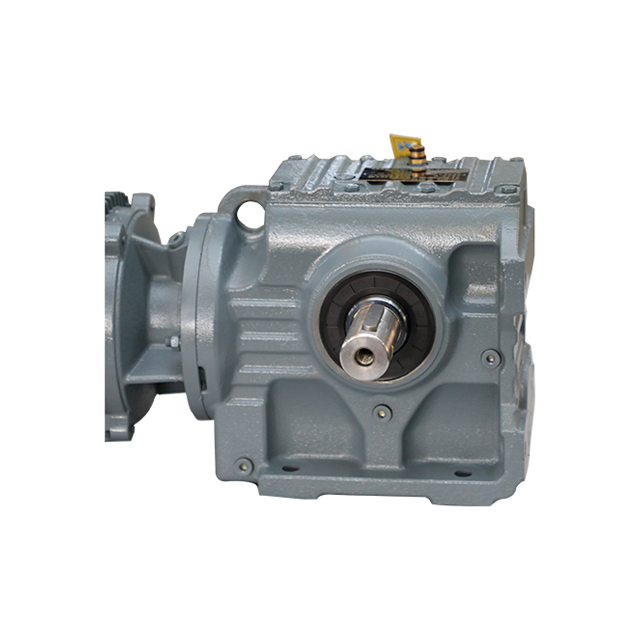
You see the core of worm gear reducers in the way the worm and worm wheel work together. The worm looks like a screw and rotates inside the gearbox. As you turn the worm, its threads slide against the teeth of the worm wheel. This sliding contact creates a unique mechanical process:
The worm transmits motion to the worm wheel through sliding contact between its flanks and the gear teeth.
The worm acts like a screw, driving the gear as it rotates.
This engagement allows for high transmission ratios and effective power transfer.
You notice that the worm only drives the worm wheel in one direction. The design prevents the worm wheel from turning the worm, which adds safety and stability to your system. This feature is especially important when you need to hold loads in place, such as in lifts or hoists.
The angle at which the worm meets the worm wheel, called the lead angle, plays a big role in how smoothly and efficiently power moves through the gearbox. You can see the differences in the table below:
Lead Angle | Key Characteristic | Common Use Case |
|---|---|---|
Small | Self-locking, Lower Efficiency | Lifting, Hoisting |
Large | High Efficiency, Non-locking | Continuous Power Transmission |
A smaller lead angle increases friction, which helps prevent back-driving. You use this feature when you want the system to lock in place. A larger lead angle reduces friction, giving you smoother operation and higher efficiency. You choose this setup for applications that need continuous motion.
Tip: Always consider the lead angle when selecting a worm gear reducer for your application. The right angle ensures you get the best balance of safety and efficiency.
You rely on worm gear reducers when you need significant speed reduction and high torque output. The working principle centers on the worm’s ability to turn the worm wheel slowly, even when the worm itself spins quickly. This process gives you a large reduction ratio in a compact space.
Worm gear reducers can achieve a reduction ratio of 100-1 with a single worm and gear pair.
Common reduction ratios include 40-1 and higher, which are resistant to back-driving.
You benefit from this high reduction ratio because it multiplies the torque delivered to the output shaft. The worm gear design lets you use a small motor to move heavy loads. You see this advantage in applications like conveyors, lifts, and heavy machinery.
Worm gear reducers are known for their ability to achieve high reduction ratios.
They provide torque multiplication in a compact design, making them effective for applications requiring significant torque increase.
The design features non-reversibility, enhancing system safety.
Worm gear speed reducers are compact and cost-effective compared to other gear types.
You find them widely used in applications like lifts and conveyors, where torque multiplication is essential.
You notice that the output shaft turns much slower than the input shaft, but with much greater force. This feature makes worm gear reducers ideal for tasks that demand high torque and precise control.
Note: Proper lubrication and material selection help maintain smooth power transmission and extend the life of your worm gear reducer.
You see that the working principle of worm gear reducers combines the unique interaction between the worm and worm wheel, the influence of lead angle, and the ability to deliver high torque and speed reduction. This combination gives you reliable performance in demanding industrial settings.
You gain several important benefits when you choose worm gear reducers for your machinery. These gearboxes deliver high torque output multiplier in a compact package, making them ideal for tight spaces. The design of the worm gear drive allows for large speed reductions in a single stage, which means you achieve high reduction ratios without needing a bulky system. You often see single reduction worm gear reducers used in conveyor systems, elevators, and automated machinery where high torque in compact size is essential.
Worm gear reducers operate with very low noise and produce few vibrations. The smooth meshing between the worm and worm wheel creates silent operation, which is perfect for environments where noise reduction matters.
The compact package of worm speed reducers saves space in your equipment. You can fit these gearboxes into confined areas without sacrificing performance.
The self-locking feature of worm gear reducers prevents reverse motion. You rely on this for safety in applications like cranes and lifts, where holding a load in place is critical.
You benefit from high torque capabilities at low-speed output, which is necessary for heavy-duty tasks.
The simple design of worm gear reducers means fewer moving parts, reducing the risk of mechanical failure and lowering maintenance needs.
Tip: Worm gear reducers provide a high ratio of speed reduction and high torque output in a compact package, making them a smart choice for many industrial applications.
Aspect | Benefit |
|---|---|
Noise Levels | Very low, smooth operation |
Space Efficiency | Compact package, fits in tight spaces |
Safety | Self-locking, prevents reverse motion |
Torque Output | High torque output multiplier |
Maintenance | Simple design, fewer moving parts |
You should also consider the drawbacks before selecting a worm gear reducer for your system. The main limitation comes from efficiency. Worm gear reducers have lower efficiency compared to other gear types, such as planetary gear reducers. The sliding action between the worm and the gear generates excessive heat, which can lead to accelerated wear and tear.
The primary limitations of worm gear reducers regarding efficiency and heat generation include excessive heat generation due to friction, lower efficiency compared to other gear types, and accelerated wear and tear.
You may notice higher energy costs in high-speed applications because worm gear reducers lose more energy as heat.
The high temperatures can affect lubrication and gear alignment, which may shorten the lifespan of the gearbox.
Worm gear reducers are best suited for low-power, intermittent applications rather than continuous, high-speed power transmission.
Gear Type | Efficiency Range | Suitable Applications |
|---|---|---|
Worm Gear Reducers | 70-90% | Low-power, intermittent, lifting equipment |
Planetary Gear Reducers | >85% | Industrial automation, precision machinery |
Aspect | Worm Gear Reducers | Other Gear Systems |
|---|---|---|
Initial Cost | Generally more affordable | Often higher |
Efficiency | Lower, higher energy consumption | Higher |
Cost-to-Torque Ratio | Exceptional, more torque for less cost | Varies |
Lifespan | Comparable | Varies |
Complexity | Simpler, fewer moving parts | More complex |
Noise Levels | Runs quietly | Can be noisier |
You need to weigh these benefits and drawbacks when choosing a gearbox for your application. Worm gear reducers excel in providing high torque capabilities and large single-stage reduction, but you must manage heat and efficiency for optimal performance.
You find worm gearbox solutions in many industries because they handle tough jobs and deliver reliable performance. These gearboxes work well in places where you need to move heavy loads, control speed, or keep equipment safe from back-driving. Here is a table showing where you often see worm gearbox units and their typical uses:
Industry | Common Applications |
|---|---|
Construction | Concrete mixers, cranes, excavators, conveyor systems |
Packaging | Machines for filling, sealing, labeling, and packaging |
Agriculture | Equipment for farming tasks |
Transportation | Systems for moving goods and materials |
Mining | Machinery used in extraction and processing |
You can spot worm gearbox units in many types of machinery. Here are some real-world examples:
Conveyor systems in manufacturing help control belt speed and direction.
Material handling equipment like forklifts and cranes use worm gearbox drives for precise load control.
Robotics and automation systems rely on worm gearbox units for accurate positioning.
Lifting and elevation devices such as elevators and hoists use worm gearbox solutions for secure load movement.
Automotive steering and powertrain systems depend on worm gearbox technology for smooth operation.
These examples show how worm gearbox products support a wide range of industries and tasks.
You choose a worm gearbox when you need high torque, safety, and precise control. Worm gear reducers stand out because they can reduce speed and increase torque at the same time. This makes them perfect for heavy-duty jobs.
The helical thread of the worm meshes with the worm gear teeth perpendicular to the worm shaft. When the worm rotates, the helical shape causes the worm wheel to turn slowly, which increases output torque sharply.
You benefit from several features that make worm gearbox units a smart choice:
High torque handling capability
Self-locking properties for safety
Compact design for tight spaces
Minimal maintenance requirements
Wide range of gear ratios for different needs
Quiet operation for noise-sensitive environments
Durability for long service life
Worm gearbox units also give you precise speed control. You can adjust the gear ratio to match your needs, which helps your motor run at the right speed. The self-locking feature prevents back-driving, which keeps loads secure in applications like elevators and conveyors.
Gearbox Model | Torque Capacity |
|---|---|
ZTG 110 | 800 kW |
You see that worm gearbox products offer the right mix of power, safety, and control. You can trust them for typical uses in construction, manufacturing, and other demanding fields.
You need to consider several factors when selecting the right worm reducer gearbox for your application. Start by identifying your torque and speed requirements. The output must match the demands of your machinery. You should also think about the reduction ratio, as it affects both efficiency and energy consumption. Materials play a big role in durability. Most worm reducer gearbox designs use hardened steel for the worm and bronze for the wheel, which helps resist wear and extend service life.
Environmental conditions matter. High temperatures and humidity can change the properties of materials and affect lubrication. You want a worm reducer gearbox that maintains performance even when conditions fluctuate. Installation options include foot-mounted, flange-mounted, or shaft-mounted designs. Choose the mounting method that fits your space and setup.
Here is a table to help you compare key criteria:
Criteria | Description |
|---|---|
Efficiency | Higher ratios lower efficiency; balance with your needs. |
Heat Generation | Excess heat can damage lubricant and components. |
Materials | Steel and bronze improve durability and wear resistance. |
Installation | Select mounting style for your equipment. |
Maintenance | Regular checks and lubrication keep your gearbox running smoothly. |
You should also look at your load requirements and duty cycles. Worm reducer gearbox units work best for consistent loads and intermittent operation. If your system runs all day, you may want to consider other types of reduction gear box for better efficiency.
Tip: Selecting the right worm gearbox ensures reliable output and long-term performance.
You can extend the life of your worm reducer gearbox with proper maintenance. Start by changing the oil every 6 to 12 months, depending on how often you use the gearbox. For new units, change the oil after the first 24 hours of operation. In established systems, replace conventional oil every six months or after 2,500 operating hours.
Follow these steps to keep your worm reducer gearbox in top shape:
Choose the right lubricant for your reduction gear box.
Monitor temperature to prevent overheating, which can harm lubrication and cause wear.
Maintain proper oil levels. Too much oil leads to foaming, while too little increases friction.
Inspect seals and gaskets regularly to prevent oil leaks.
Check for vibration and noise. Proper alignment and balancing help reduce these issues.
Use advanced materials and precision manufacturing for better durability and efficiency.
Environmental factors like temperature and humidity can affect your worm reducer gearbox. High heat changes lubrication and can cause thermal expansion, which may misalign gears. Always check for signs of wear and replace damaged parts quickly.
Note: Regular visual inspections help you catch problems early and keep your worm gear reducer working efficiently.
You can rely on modern worm reducer gearbox designs that use high-strength alloys and advanced manufacturing techniques. These improvements help reduce friction, increase efficiency, and extend the lifespan of your gearbox.
You see that worm gear reducers deliver high torque in a compact size and offer large single-stage reduction capabilities. These gearboxes convert fast input speeds into slow, powerful output and feature a self-locking design for safety. When you select the right model and maintain it regularly, you minimize wear and extend its lifespan. You can rely on worm gear reducers for reliable speed control and holding power in many industrial settings.
High torque and precise speed control
Self-locking for enhanced safety
Long-term reliability with proper care
Choose worm gear reducers when you need dependable performance and safety.
A worm gear reducer is a gearbox that uses a worm and worm wheel to reduce speed and increase torque. You often use worm gear reducers in machines that need high torque and precise speed control.
A right angle worm gear reducer changes the direction of power by 90 degrees. You use it when you need to fit a gearbox into tight spaces or change the direction of rotation in your machinery.
You use metric worm gear reducers in equipment that follows international standards. These reducers fit machines built with metric measurements. You find them in global manufacturing, packaging, and automation systems.
A worm gear speed reducer gives you high reduction ratios in one stage. You get smooth, quiet operation and self-locking ability. This makes worm gear speed reducers ideal for lifts, conveyors, and heavy-duty machines.
You should check oil levels, change lubricant regularly, and inspect for leaks. Keep your worm gear reducers clean and monitor for unusual noise or vibration. Proper maintenance helps you extend the life of your gearbox.


