
- All
- Product Name
- Product Keyword
- Product Model
- Product Summary
- Product Description
- Multi Field Search


Views: 0 Author: Site Editor Publish Time: 2026-06-19 Origin: Site


Modern industrial applications demand increasingly higher torque outputs without expanding the mechanical footprint. Engineers face a relentless battle against spatial constraints when designing heavy-duty machinery. Standard power transmission methods often fail to meet these stringent density requirements. Upgrading a machine's power typically requires a massive increase in component size, which disrupts entire assembly layouts.
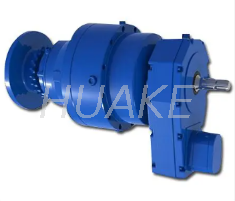
Enter the epicyclic design. Today, Planetary Gear Reducers act as the industry standard for high-density power transmission. They consistently outpace traditional gearboxes in raw capability. Their unique internal architecture allows them to handle massive forces inside surprisingly small housings.
While the fundamental epicyclic mechanics are widely understood, selecting the correct unit requires deep technical nuance. We will explore specific load distribution mechanics, thermal realities, and strict application constraints. You will learn how to properly evaluate duty cycles, manage backlash tolerances, and avoid common implementation failures.
Planetary gear reducers distribute loads across multiple planet gears, exponentially increasing torque capacity within a compact radial footprint.
A high torque planetary reducer outperforms traditional spur or helical gearboxes in power density and torsional stiffness, but requires stricter alignment and lubrication protocols.
Evaluating these reducers requires looking beyond nominal torque ratings to factor in duty cycles, backlash tolerance, and thermal dissipation limits.
Proper specification prevents common implementation failures, such as premature bearing wear from unexpected radial loads or lubricant degradation in continuous-duty applications.
Standard gear systems rely heavily on single-tooth contact points. Think about traditional spur or worm gears. They channel the entire rotational force through one engaging tooth at any given moment. This concentrated pressure creates severe stress bottlenecks. Mechanical fatigue accelerates rapidly under heavy loads. You also face terrible spatial inefficiencies when attempting to scale these systems for high torque. The gearbox housing must grow massive to accommodate larger, thicker gear teeth capable of surviving the strain.
The epicyclic solution elegantly solves this mechanical bottleneck. It relies on brilliant mechanical synergy among four primary components. A central sun gear receives the high-speed motor input. Multiple planet gears orbit this central sun gear while locked firmly within a rotating carrier. Finally, an outer stationary ring gear encases the entire assembly. All these components mesh simultaneously. The carrier acts as the primary output, rotating at a much slower, highly amplified speed.
This internal arrangement unlocks the powerful torque multiplication principle. The input load distributes equally across three or more planet gears. You divide the exact same mechanical stress across multiple engagement points. Because the load splits evenly, the stress per individual tooth drops dramatically. This clever division of labor allows the system to transmit significantly higher forces without shearing a tooth.
We also gain a major coaxial advantage through this design. The inline arrangement transfers power symmetrically straight down the center line. It completely eliminates transverse forces acting on the motor shaft. Traditional parallel-shaft gearboxes constantly push the motor shaft sideways, creating unequal radial pressure. Epicyclic symmetry removes this sideways pushing force. It dramatically improves overall system longevity and actively prevents premature motor bearing failure.
Engineers constantly try to do more in less space. A High Torque Planetary Reducer quantifies this performance-to-footprint principle perfectly. Planetary designs achieve much higher reduction ratios in a distinctly smaller volume. We can directly compare their footprint to parallel-shaft gearboxes. You can often cut the required installation volume in half while maintaining the exact same torque output. This compact nature makes them indispensable for mobile robotics and automated guided vehicles.
Torsional stiffness represents another critical engineering victory. Multi-gear contact actively minimizes elastic deflection during operation. When you apply sudden rotational torque, the gear teeth do not bend or yield significantly. This rigid behavior is absolutely critical for precision positioning. CNC machining centers and surgical robotics rely heavily on this high stiffness to maintain exact spatial coordinates under heavy cutting loads.
You also gain exceptionally high efficiency ratings. Typical mechanical efficiency often reaches 95% to 97% per single stage. This high performance happens because the internal components utilize rolling contact rather than sliding contact. Sliding friction heavily plagues traditional worm gears and generates immense energy loss through heat. Rolling contact ensures you transfer maximum motor power directly to the load.
We must clarify these claims for balanced decision-making. These distinct advantages compound mainly in applications requiring high dynamic performance. They excel during rapid start-stop cycles, reversing loads, or heavy shock impacts. If you only need a low-torque, continuous-speed conveyor drive, simpler gearboxes might actually prove more cost-effective. You should reserve epicyclic designs for tasks demanding high power density and uncompromising precision.
Backlash measures the tiny amount of lost motion between meshing gear teeth. We typically measure this clearance in arcminutes. Standard backlash usually falls between 5 to 15 arcminutes. Precision backlash drops down to a microscopic 1 to 3 arcminutes. Managing this lost motion determines how accurately your machine can reverse direction without hesitating.
You face a strict decision matrix here. Micro-backlash carries a heavy price premium due to the required manufacturing tolerances. You must pay this premium for servo-driven automation where positional accuracy dictates success. Heavy material conveyors rarely notice a few arcminutes of play. Standard backlash easily suffices for those rough applications, saving you significant budget.
A single-stage planetary gear faces hard physical limits. You typically max out around a 10:1 reduction ratio. Attempting higher ratios in one single stage weakens the sun gear too much by making it dangerously small. We solve this limitation by stacking multiple stages together. Stacking directly impacts your maximum torque output, physical unit length, and mechanical efficiency.
| Configuration | Typical Ratio Range | Estimated Efficiency | Primary Impact on System |
|---|---|---|---|
| Single-Stage | 3:1 up to 10:1 | 95% - 97% | Shortest physical length; highest efficiency. |
| Two-Stage | 15:1 up to 100:1 | 90% - 94% | Increased housing length; slight drop in torsional stiffness. |
| Three-Stage | 100:1 up to 1000:1 | 85% - 90% | Massive torque multiplication; longest axial footprint. |
Your operating environment strictly dictates external housing choices. Standard aluminum housings fail rapidly in harsh chemical conditions. You must accurately assess IP ratings for dust and water ingress. Food processing or medical grade applications demand absolute washdown readiness. These specialized scenarios strictly require stainless steel housings, FDA-approved lubricants, and specialized Viton seals to survive daily chemical cleaning.
High power density creates a severe primary risk: trapped heat. Planetary Gear Reducers running at continuous high speeds can quickly overheat. The compact external volume leaves very little surface area for natural thermal dissipation. Extreme duty cycles often mandate expensive synthetic lubricants or active liquid cooling loops. You cannot simply attach a high-speed motor and ignore the resulting thermal buildup.
We also face strict lubrication dependencies. Units arrive utilizing either heavy grease or liquid oil. Your chosen mounting orientation drastically affects lubrication efficacy. Horizontal mounting distributes oil evenly across all planet gears. Vertical mounting actively pulls oil away from the top bearings via gravity. You must specify the exact mounting position during ordering to ensure maximum unit lifespan.
Do not ignore external shaft forces. This remains a massive adoption risk across the industry. Selecting a unit based solely on rotational torque leads to disaster. You must rigorously calculate radial and axial loads acting directly on the output shaft. Pushing heavy external belts or pulleys against the shaft creates side-loads. Overloading these vectors guarantees premature output bearing failure.
Consider the following common risks and structured mitigation steps:
Trapped Heat Accumulation: Install active cooling plates or deliberately program intermittent duty cycles to allow cooling phases.
Lubrication Starvation: Verify the manufacturer's vertical mounting kit if pointing the output shaft directly upward.
Excessive Bearing Wear: Support heavy overhung loads using external pillow block bearings rather than relying on the internal gearbox bearings.
Finally, consider the acoustic profile. Straight-cut planetary gears generate a distinctly loud acoustic footprint. High motor speeds produce a highly noticeable whine due to the sudden tooth engagement. Manufacturers introduce helical planetary designs as a powerful mitigation strategy. Helical teeth engage gradually, vastly reducing operating noise for sensitive laboratory or factory environments.
You must clearly define the application profile first. Differentiate heavily between continuous duty and cyclical operations. Engineers classify these as S1 and S5 duty cycles. S1 duty means the motor runs continuously at a constant load without stopping. S5 duty involves rapid starting, aggressive braking, and highly dynamic load changes. The thermal realities of an S1 application differ vastly from an S5 profile.
Next, calculate the motor match precisely. You need a solid framework for matching the motor's peak torque and rotational inertia with the gearbox. A severely mismatched servo motor can easily override the reducer's mechanical limits during a sudden crash stop. If the motor inertia vastly outweighs the load inertia, the gearbox absorbs massive destructive forces during deceleration.
We must accurately apply a proper Service Factor (Fs). Do not rely solely on catalog nominal ratings. Apply realistic safety margins based on external shock loads and actual daily operating hours. A conveyor system running 24 hours a day needs a substantially higher Fs than a machine running a single 8-hour shift. Shock loads from heavy metal stamping require even higher safety multipliers.
Follow these structured next-step actions to formalize your procurement process:
Map out your complete motion profile, capturing top speed, required continuous torque, and total system inertia.
Define the absolute worst-case environmental conditions the unit will face on the factory floor, including ambient temperature.
Calculate expected radial and axial loads placed directly on the gearbox output shaft by external pulleys or gears.
Share this comprehensive data package directly with your engineering partners to determine the exact internal gear ratios.
Never just request an off-the-shelf part number without verifying these parameters. Guessing dimensions invariably leads to suboptimal performance or premature breakdown.
Planetary gear reducers deliver far more than just a high-torque alternative. They act as a foundational component for maximizing both power density and positional precision. Their ability to distribute massive forces across multiple contact points makes them indispensable for modern, compact machinery. Careful evaluation ensures you extract their full mechanical potential without triggering thermal or structural failures.
Maintain a healthy technical skepticism during specification. Over-specifying your backlash or load ratings strictly leads to a bloated, wasted budget. Conversely, under-specifying thermal limits or radial load capacity leads directly to catastrophic machine downtime. The middle ground requires strict mathematical validation.
Take the necessary time to run the mechanical math. We highly encourage you to consult with dedicated applications engineers. Always use a verified sizing tool to calculate your exact torque, speed, and inertia requirements before finalizing any purchase decision.
A: Standard mechanical efficiency typically ranges from 94% to 97% for a single-stage unit. This high efficiency stems from utilizing rolling gear contact. However, efficiency drops slightly by about 2% to 3% with each additional gear stage you stack onto the assembly.
A: Yes, unlike traditional worm gears, they are highly reversible and easily back-driven. This reversibility proves highly beneficial for machine safety during power failures. However, it strictly requires you to install external braking mechanisms for reliable load-holding.
A: Load distribution across multiple planet gears inherently absorbs mechanical shock far better than single-tooth contact gears. The impact spreads evenly across the entire internal ring. Despite this resilience, massive dynamic impacts still require proper service factor calculations during the design phase.
A: Overheating commonly stems from continuous operation pushing beyond the rated duty cycle. Other frequent causes include excessive input motor speeds, improper mounting orientation leading to poor internal lubrication, or mistakenly selecting an undersized unit for the applied load.


