
- All
- Product Name
- Product Keyword
- Product Model
- Product Summary
- Product Description
- Multi Field Search


Views: 0 Author: Site Editor Publish Time: 2026-06-20 Origin: Site


Gearbox maintenance is never merely a routine mechanical chore. You must treat it as a critical risk-mitigation strategy. Proactive care prevents costly unplanned downtime. It ultimately protects your massive capital investments in heavy machinery. Today's industrial environments heavily rely on these sophisticated systems. They offer superior torque density and compact power transmission. However, this internal mechanical complexity requires incredibly precise operational conditions. You must maintain specific baseline parameters to actually achieve the manufacturer's advertised lifecycle hours. This comprehensive guide outlines robust, evidence-based maintenance protocols. Our goal is to help you stabilize long-term operational expenses for complex industrial applications. You will discover practical ways to transition from reactive fixes to predictive monitoring. We will also detail specific lubrication, alignment, and diagnostic strategies. These technical insights will empower your team to keep critical equipment running flawlessly.
Routine lubrication management accounts for the majority of lifespan extension in planetary gear systems.
Predictive maintenance (vibration and thermal monitoring) is replacing reactive schedules to prevent catastrophic failure.
Proper initial alignment and installation are just as critical to ongoing maintenance as scheduled inspections.
Procurement decisions should factor in maintenance accessibility and manufacturer-provided lifecycle data.
Industrial facilities often severely underestimate the true cost of sudden gearbox failure. When these essential mechanical units break down, the financial damage extends far beyond buying replacement parts. You immediately face severe production downtime. Your facility also incurs massive labor hours for emergency repairs. In high-volume manufacturing, every minute of stalled production drains profitability rapidly. Rushing expedited freight for heavy replacement gears only compounds the financial bleed.
Successful maintenance programs aim for highly predictable operational budgets. They actively maximize the Mean Time Between Failures (MTBF). At the same time, they systematically minimize the hours spent on routine interventions. Industry data shows a clear performance reality. You might purchase the absolute highest quality units available on the market today. However, running them continuously beyond specified load limits destroys them. Ignoring baseline maintenance will exponentially degrade the internal gear mesh geometry.
Metal-on-metal friction increases rapidly when maintenance lapses. Internal components begin to shear under extreme stress. The planetary carrier, sun gear, and ring gear all rely on exact spacing. When wear alters this spacing, the entire system loses efficiency. Therefore, a structured, unyielding maintenance routine protects your bottom line directly. You stop paying for emergency breakdowns. Instead, you invest in predictable, controlled longevity.
Facilities generally choose between two primary maintenance frameworks. The first is preventive maintenance. This approach relies on strict calendar or usage-based schedules. The second is predictive maintenance. This condition-based approach relies heavily on real-time diagnostic data.
Preventive maintenance is incredibly easy to schedule. It helps standardize your monthly operational expenses. Maintenance teams simply change oil or replace seals based on operating hours. However, this framework carries distinct drawbacks. You risk over-maintaining perfectly healthy equipment. You throw away good oil and waste labor hours. Worse, you might completely miss erratic wear patterns developing quietly between scheduled checks.
Predictive maintenance changes this dynamic entirely. Technicians utilize sophisticated vibration analysis, oil spectrometry, and advanced thermal imaging. You only intervene when diagnostics indicate a specific, developing problem. The implementation reality requires significant upfront investment. You must buy specialized sensors. You must also invest in comprehensive diagnostic training for your staff. Despite these initial costs, predictive maintenance yields the lowest long-term risk for mission-critical applications.
We highly recommend a hybrid approach. You should base this evaluation on your specific cost-of-downtime metrics. Use simple calendar checks for low-priority systems. Deploy advanced predictive sensors on critical production bottlenecks. This balances your budget while protecting vital assets.
| Feature | Preventive Maintenance | Predictive Maintenance |
|---|---|---|
| Trigger | Calendar dates or operating hours | Real-time condition monitoring data |
| Upfront Cost | Very low (requires basic tools) | High (requires sensors and training) |
| Risk of Over-Maintenance | High (replacing parts too early) | Low (only act when needed) |
| Best Applied To | Auxiliary or non-critical machinery | High-stakes, continuous-duty production lines |
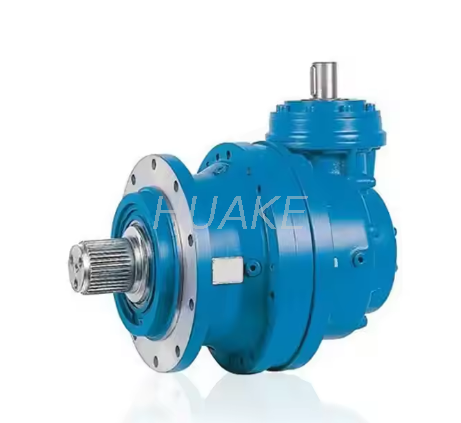
Maintaining a Precision Planetary Gearbox demands a highly structured, uncompromising approach. You must address three core pillars to ensure optimal performance. Ignoring any single pillar dramatically increases the likelihood of premature failure.
Proper lubrication prevents the massive frictional forces inside the gear housing from destroying the metal surfaces. You must implement a disciplined approach to fluid management.
Verify the correct lubricant type: Manufacturers specify either synthetic or mineral oils based on operating temperatures. Always adhere strictly to OEM kinematic viscosity specifications.
Establish rigid change intervals: Schedule regular oil changes based on actual operating conditions. If your unit uses grease, schedule timely and precise replenishment.
Control fluid volumes carefully: Technicians must understand the delicate balance of fluid levels. Avoid the temptation to add extra oil.
Over-lubrication causes severe fluid churning and thermal expansion. This excess pressure often leads to sudden seal blowouts. Conversely, under-lubrication destroys internal components rapidly. It causes aggressive metal-to-metal wear. Both extremes dramatically shorten equipment lifespan.
Regularly inspect the outer casing for visual indicators of failure. Look closely for minor oil leakage around the input and output shafts. Check for any ingress of environmental dust, water, or chemical moisture. Degraded seals represent the absolute primary entry point for particulate contamination.
When abrasive dust enters the housing, it mixes with the oil. This mixture acts exactly like a liquid sandpaper. It rapidly accelerates internal bearing failure. It also strips the hardened surfaces off the gear teeth. You must replace compromised seals immediately. Never ignore a weeping seal. It signals that the internal environment is actively degrading.
Proper physical positioning matters immensely. Routinely check for subtle foundation settling beneath the machine base. Inspect the unit meticulously for loose mounting bolts. These seemingly minor structural issues introduce severe angular misalignment over time.
Micro-misalignments generate intense harmonic vibrations. They place uneven loads across the planetary carrier. Standard fluid maintenance cannot fix these destructive mechanical forces. You must perform precise mechanical recalibration. We recommend using laser alignment tools during scheduled shutdowns. This eliminates the guesswork associated with dial indicators. Perfect alignment prevents uneven gear wear and protects the motor bearings simultaneously.
Even the highest quality Planetary Gear Reducers face harsh operational risks. Identifying these threats early prevents catastrophic mechanical failure. Your team must know how to spot the warning signs immediately.
Excessive heat destroys gear components and degrades oil rapidly. Common causes include inadequate ambient ventilation and excessive input motor speeds. Degraded oil and persistent mechanical overloading also spike internal temperatures significantly. A clogged breather plug can trap heat and pressure inside the housing.
You must implement effective solutions rapidly when temperatures rise. Consider adding efficient external cooling loops for high-intensity, continuous-duty applications. Verify your initial application sizing. Ensure your operational load does not exceed the unit's maximum thermal capacity. Strict adherence to proper oil viscosity remains absolutely essential. Thin oil breaks down under heat, causing friction that generates even more heat.
Sudden acoustic changes signal serious internal trouble. Causes typically include surface pitting or spalling on the gear teeth. Bearing degradation and backlash expansion also create harsh, irregular grinding sounds. A high-pitched whine often indicates a bearing issue. A rhythmic clunking usually points to a damaged gear tooth.
You must perform an immediate acoustic and vibration baseline comparison. Listen carefully to your machinery daily. Emphasize to your entire team that increased noise represents a lagging indicator of wear. The physical damage has already started. Therefore, your corrective action must be immediate. Shut down the unit to prevent total mechanical shearing. Investigate the vibration source before restarting the line.
Smart maintenance starts long before the actual installation. You must assess a manufacturer's specific maintenance requirements before finalizing any purchase. Proper evaluation prevents future operational headaches and wasted labor.
Look closely at three crucial evaluation dimensions:
Accessibility: Check the physical layout of the unit. Are grease zerks easily accessible? Can you reach the oil drain plugs and sight glasses in your intended mounting orientation? If technicians cannot reach the plugs, they will skip the maintenance.
Sealing Technology: Evaluate the environmental protection levels. Does the unit offer IP-rated sealing appropriate for your exact operating environment? Food processing washdown areas require vastly different seals than heavy mining dust zones.
Documentation: Demand highly transparent data. Does the supplier provide empirical data on maintenance intervals? Look for proven lifecycle expectations aligned with AGMA standards, rather than empty marketing claims.
When applying your shortlisting logic, advise your purchasing team carefully. Buyers should strictly prioritize vendors offering highly comprehensive service manuals. Favor units featuring built-in predictive maintenance compatibility. Pre-drilled sensor ports for vibration probes save immense installation time later. Finally, verify localized spare part availability. You simply cannot afford to wait weeks for overseas shipping during a critical production breakdown.
Maintaining these complex drive systems requires a strictly structured, proactive discipline. You must center your ongoing efforts heavily on precise lubrication, exact physical alignment, and rigid environmental control. Proactive care actively prevents minor issues from snowballing into complete mechanical failures. By shifting toward predictive monitoring, you protect your machinery and your production schedules simultaneously.
Take immediate action today. First, review your current operational loads. Compare them directly against your specific OEM manuals to ensure compliance. Second, consider contacting a trusted vendor's engineering team. Ask them to audit your specific application. They can verify proper sizing and help optimize your long-term maintenance scheduling.
A: It depends heavily on your specific operating cycle and ambient temperature. Most industrial applications require an oil change every 5,000 to 10,000 hours of operation. High-heat environments necessitate much shorter intervals. You must defer strictly to your OEM guidelines to ensure optimal performance and avoid voiding warranties.
A: Bearings and external seals are standard replacement items during routine servicing. However, severe damage to the internal planetary carrier or the main ring gear creates major issues. In these severe cases, total replacement often proves much more cost-effective than attempting a complex rebuild. Preventive care is crucial.
A: We strongly recommend utilizing high-quality synthetic lubricants. They offer significantly higher thermal stability than standard mineral oils. You must also ensure the unit never exceeds its rated thermal capacity during peak loads. If ambient temperatures run high, installing external cooling mechanisms becomes absolutely necessary.
A: Specific industries mandate strict environmental and safety compliance. Food processing requires designated food-grade (H1) lubricants. High-pressure washdown environments demand specific IP ratings. These ratings dictate exactly what chemicals and water pressures you can safely use during routine external cleaning without compromising internal seals.


