
- All
- Product Name
- Product Keyword
- Product Model
- Product Summary
- Product Description
- Multi Field Search


Views: 0 Author: Site Editor Publish Time: 2026-11-06 Origin: Site


Small mechanical clearances can cause major positioning errors. This is especially important in robotics and CNC systems. Gearbox backlash creates lost motion during direction changes. This article explains its effects, measurement methods, and compensation techniques. You will also learn how to select a suitable low-backlash gearbox.
Gearbox backlash is the small clearance between two meshing gear teeth. It allows the teeth to move slightly before contact transfers motion.
This clearance is not always a manufacturing defect. Gears need suitable space for lubrication and thermal expansion. Proper clearance also helps prevent excessive friction during operation.
However, excessive gearbox backlash creates unwanted movement. The input shaft may rotate before the output shaft responds. This difference is known as lost motion.
A gearbox transfers motor rotation to the driven equipment. Backlash creates a small gap between the input and output movements. As a result, actual positioning may differ from commanded positioning.
Consider a positioning table driven by a servo motor. The motor receives a command to move through a specific angle. However, the gearbox output may respond after some initial movement is lost.
This creates a rotational positioning error. The effect becomes more noticeable when equipment requires frequent adjustments. Precision machinery must therefore control gearbox clearance carefully.
Backlash becomes especially important when the motor reverses direction. The gear teeth must cross the clearance before opposite contact surfaces engage.
During this transition, the input shaft continues moving. However, the output shaft may remain temporarily stationary. This creates a short delay in mechanical response.
Repeated forward and reverse movements can increase positioning deviations. Applications involving robotic joints and CNC axes are particularly sensitive. Their motion systems need predictable responses in both directions.
Servo motors use feedback systems to control movement. Their encoders measure motor position and provide feedback to controllers. However, a motor-side encoder cannot directly measure every mechanical error after the gearbox.
When gearbox backlash exists, the motor may reach its commanded position. Yet the connected load may remain slightly behind. This difference affects actual output positioning accuracy.
An output-side encoder can provide additional feedback. It measures the driven component rather than relying only on motor position. This approach helps identify transmission errors in demanding applications.
Positioning accuracy describes how closely a system reaches its target. Repeatability describes its ability to return consistently to the same position. These are related but different performance measures.
Gearbox backlash can affect both characteristics. Changing movement directions may produce different output responses. Variable loads can also change how gear teeth engage.
Excessive clearance may contribute to vibration and unstable movement. It can also make precise positioning more difficult. Engineers should evaluate both static and dynamic performance.
CNC machines require accurate movement across multiple axes. Backlash can create dimensional errors during cutting and positioning. Its effects become more important during frequent axis reversals.
Robotic joints also depend on accurate angular movement. Small errors at individual joints can affect the final tool position. This is especially important in assembly and material handling applications.
The required accuracy depends on the complete machine. Engineers should consider gearbox backlash alongside structural stiffness and control resolution. System-level testing provides a more realistic performance evaluation.
A low backlash gearbox can improve directional positioning. It reduces lost motion between the input and output shafts. This makes it useful for precision motion applications.
However, low backlash does not guarantee perfect accuracy. Gear tooth errors, shaft deflection, and bearing clearance also affect positioning. Installation alignment and control performance matter too.
Engineers should evaluate the complete transmission system. They should also consider operating torque and temperature changes. A balanced design is more useful than focusing on one specification.
Summary Table
Backlash Condition | Transmission Behavior | Positioning Impact |
|---|---|---|
Low backlash | Small lost motion | Better directional positioning |
Moderate backlash | Noticeable clearance | Possible positioning deviations |
Excessive backlash | Greater lost motion | Reduced accuracy |
Uneven backlash | Inconsistent engagement | Variable positioning errors |
Note: Actual positioning accuracy also depends on gear stiffness, encoder resolution, bearing clearance, and installation quality.
Acceptable gearbox backlash tolerance depends on the machine's accuracy requirements. Different transmission structures also have different clearance characteristics. Engineers should evaluate several factors before selecting a suitable gearbox.
Different gearbox structures produce different backlash characteristics. Planetary, harmonic, bevel, and helical gearboxes use different transmission arrangements.
Harmonic drives can achieve very low backlash through their flexible transmission design. Precision planetary gearboxes also offer low-backlash configurations. Their actual performance depends on manufacturing accuracy and assembly quality.
Bevel and helical gearboxes serve many industrial applications. Their backlash depends on gear geometry and design requirements. Buyers should compare documented specifications rather than assume one structure always performs better.
Gear tooth geometry directly influences transmission clearance. Manufacturing errors can create uneven contact between mating teeth. This may increase backlash or produce inconsistent movement.
Machining accuracy also affects gear engagement. Tooth profile errors and incorrect assembly positions can reduce transmission precision. Consistent manufacturing helps maintain predictable mechanical performance.
Assembly procedures are equally important. Incorrect bearing positioning or shaft alignment may affect gear contact. Manufacturers should inspect these factors during gearbox production.
Operating torque influences how gear teeth contact each other. Different loads can change the transmission system's mechanical behavior. Engineers should evaluate both normal and peak operating conditions.
Temperature changes can also affect internal clearances. Gearbox components expand during operation. Lubrication conditions influence friction and transmission stability.
Frequent starting and reversing create additional demands. These conditions may increase wear over time. The selected gearbox should match the actual duty cycle.
Different machines require different positioning accuracy levels. General conveyors usually prioritize stable transmission and load capacity. CNC equipment often requires tighter positioning control.
Robotic systems need consistent movement across multiple joints. Small errors can accumulate throughout the mechanism. Automated inspection equipment may also require precise positioning.
Buyers should define the required accuracy before purchasing. They should consider repeatability, operating speed, and load conditions. These requirements help determine acceptable gearbox backlash tolerance.
Tip: Request backlash specifications alongside rated torque and reduction ratio. This makes technical comparisons more meaningful.
Gearbox backlash measurement helps engineers evaluate mechanical clearance. It also provides useful information during quality inspection and maintenance. Consistent testing is essential for reliable comparisons.
A common method uses a dial indicator to measure output movement. The technician secures the gearbox housing and restricts the input shaft. A suitable measuring fixture contacts the output shaft.
The output shaft is moved carefully in both directions. The indicator records the movement before opposite gear surfaces engage. This movement represents the measured backlash under the test conditions.
Some gearboxes require special fixtures or manufacturer procedures. Their shaft arrangements may affect the measurement method. Always follow the applicable technical documentation.
Rotational backlash describes the angular movement caused by gear clearance. Engineers commonly express it in degrees or arcminutes. One degree contains sixty arcminutes.
For example, a measured angular clearance of 0.1 degrees equals six arcminutes. This conversion helps engineers compare specifications. However, the value alone does not establish system accuracy.
For linear positioning systems, angular movement can also create displacement. The resulting movement depends on the connected mechanism. Engineers must consider the output geometry when evaluating actual positioning errors.
Unloaded measurements help identify basic mechanical clearance. They provide a useful starting point for gearbox inspection. However, they do not describe every operating condition.
Loaded testing can reveal additional transmission behavior. Applied torque may influence gear contact and structural deflection. Engineers should record the test load and direction.
Temperature and lubrication conditions also matter. Measurements should use consistent procedures and suitable equipment. This improves repeatability between inspections.
Buyers should first check the manufacturer's specified backlash range. They should confirm whether the value represents a new gearbox or an operating unit. Measurement conditions should also be clearly stated.
Different manufacturers may use different testing procedures. Their results may not be directly comparable. Buyers should request technical explanations before making decisions.
It is also important to distinguish backlash from total positioning error. Backlash represents only one source of mechanical deviation. The complete motion system requires separate evaluation.
Note: Always compare gearbox backlash values using the same measurement method and operating conditions.
Engineers can reduce positioning errors through mechanical design and control adjustments. The best solution depends on the required accuracy and operating conditions. Both gearbox selection and installation quality matter.
Selecting a low backlash gearbox is a direct way to reduce lost motion. Precision gear manufacturing helps improve tooth engagement. Suitable transmission structures can also support better positioning performance.
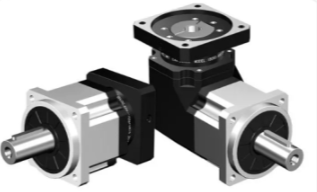
For servo applications, engineers often consider precision planetary gearboxes. These units can combine compact dimensions and useful torque capacity. Their backlash specifications should match the intended motion requirements.
Explore the precision planetary gearbox options when evaluating transmission solutions. Compare their rated torque, reduction ratio, and documented backlash values before selection.
Mechanical compensation reduces clearance through adjustments to transmission components. Some gear systems use adjustable arrangements to improve tooth engagement. Preloaded mechanisms can also help control unwanted movement.
However, excessive preload can increase friction and heat. It may also increase bearing loads and mechanical wear. Engineers must balance clearance reduction against operating requirements.
Mechanical compensation should follow the gearbox manufacturer's recommendations. Not every gearbox supports field adjustment. Incorrect adjustments may damage internal components.
Motion controllers can compensate for predictable backlash. They add a correction when the system changes direction. This helps reduce the effect of mechanical lost motion.
The controller needs reliable compensation values. Engineers should measure the actual backlash before configuring the system. Calibration should reflect the operating load and movement direction.
Electronic compensation has practical limitations. It cannot remove physical clearance or correct every mechanical error. Changing loads and wear may also affect compensation accuracy.
Incorrect installation can introduce additional positioning errors. Shaft misalignment may increase vibration and uneven loading. Poor mounting can also affect transmission stability.
Engineers should check coupling alignment and foundation rigidity. Bearing support must also match the gearbox design. These factors help maintain consistent mechanical engagement.
Regular inspections can identify installation problems early. They also help prevent unnecessary component wear. Proper installation supports the gearbox's intended performance.
Tip: Measure backlash before and after installation. This helps identify whether mounting conditions affect transmission accuracy.
Gearbox structure influences backlash, torque capacity, and application suitability. However, the gearbox type alone cannot determine actual performance. Manufacturing quality and product specifications remain essential.
Harmonic drive gearboxes use a flexible transmission arrangement. Their design can achieve very low backlash. This makes them useful for precision motion applications.
Robotic joints often require compact transmission components. They also need controlled angular movement. Harmonic drives can support these requirements in suitable designs.
However, engineers should check rated torque and torsional stiffness. Operating speed and service conditions also matter. Low backlash alone should not determine the final selection.
Planetary gearboxes distribute torque through multiple planet gears. Their compact structure supports many industrial transmission applications. Precision versions can provide low backlash.
Servo systems often use planetary gearboxes for controlled movement. They can support applications requiring a combination of torque and positioning performance. Actual accuracy depends on the gearbox specification.
The precision planetary reducer category provides another reference for evaluating these products. Buyers should check backlash, output torque, and transmission ratio together.
Bevel helical gearboxes combine bevel and helical gear arrangements. They can provide right-angle transmission for industrial machinery. Their configuration supports flexible installation layouts.
These gearboxes are commonly considered for conveyors and mixers. Such applications often prioritize torque transmission and reliable operation. Their backlash requirements may differ from precision servo systems.
Engineers should verify the specified backlash range. Shaft arrangement and mounting conditions also need attention. A suitable gearbox must match the complete drive system.
Harmonic drives are useful for compact precision motion systems. Precision planetary gearboxes suit many servo and automation applications. Bevel helical gearboxes support industrial right-angle transmission.
The correct choice depends on the application. Engineers should consider torque, speed, stiffness, and positioning requirements. Purchase cost and maintenance needs also influence the decision.
The following table summarizes their main characteristics. Actual performance must be confirmed through product documentation.
Gearbox Type | Backlash Characteristics | Typical Applications |
|---|---|---|
Harmonic Drive | Very low backlash designs available | Robotics and precision motion |
Precision Planetary | Low backlash options available | Servo systems and CNC equipment |
Bevel Helical | Depends on design and accuracy | Industrial transmission |
Standard Helical | Depends on manufacturing and assembly | General machinery |
Note: Do not treat low backlash as proof of high positioning accuracy. Evaluate stiffness, load capacity, and transmission errors together.
Gearbox backlash may increase during long-term operation. Wear, lubrication problems, and excessive loads can change gear engagement. These changes may reduce positioning performance.
Delayed output movement is one common warning sign. The motor may respond normally while the driven component moves later. This becomes noticeable during direction changes.
Abnormal noise may also indicate transmission problems. Gear teeth can produce impact sounds when clearance becomes excessive. Vibration may increase during repeated movements.
Positioning deviations provide another important warning. Equipment may fail to return consistently to its target position. Engineers should investigate sudden changes in measured backlash.
Gear teeth experience contact forces during normal operation. Lubrication helps reduce friction between mating surfaces. Poor lubrication can accelerate surface wear.
Excessive loads may also damage gear tooth surfaces. Repeated impact and unsuitable operating conditions increase mechanical stress. Over time, these problems can change tooth geometry.
Regular inspections help identify early deterioration. Engineers should monitor lubricant condition and operating noise. Unusual changes require further mechanical examination.
Adjustment may be suitable when the gearbox supports mechanical clearance correction. However, engineers must follow the manufacturer's procedures. Incorrect adjustment can increase friction and internal stress.
Replacement may become necessary when components show significant wear. Damaged gear teeth and excessive clearance can affect transmission reliability. Maintenance records help support this decision.
Always compare inspection results against manufacturer limits. Consider operating conditions and repair costs as well. This approach helps prevent unnecessary replacement.
Tip: Record backlash measurements during routine maintenance. Comparing historical results helps identify gradual changes before major failures occur.
Selecting a suitable gearbox requires more than comparing backlash figures. Buyers should evaluate transmission performance, mechanical compatibility, and long-term operating requirements. A complete technical review reduces selection risks.
Request documented backlash specifications from the supplier. Confirm the measurement method and testing conditions. This makes comparisons between different gearbox models more reliable.
Check whether the stated value applies to the complete gearbox. Some specifications describe individual transmission stages. The distinction matters when evaluating multi-stage gearboxes.
Buyers should also request relevant inspection records. These documents help verify product consistency. They provide a clearer basis for technical evaluation.
Rated torque determines the gearbox's continuous transmission capability. Peak torque describes its ability to handle temporary higher loads. Both values should match the application.
The reduction ratio determines the relationship between input and output speeds. Buyers should confirm the required output speed. Motor characteristics must also match the selected gearbox.
Positioning requirements should guide the final decision. Consider accuracy, repeatability, and operating frequency together. A low backlash specification alone is insufficient.
Gear manufacturing accuracy influences backlash consistency. Buyers should review tooth machining and assembly procedures. Material quality and heat treatment also deserve attention.
Inspection procedures help maintain product consistency. Ask how suppliers measure backlash and verify transmission performance. Batch inspection records can provide useful evidence.
Surface finish and internal component quality also matter. They influence friction and long-term transmission behavior. Reliable quality control supports stable operation.
Technical support helps buyers match gearbox specifications to machine requirements. Suppliers should provide suitable product drawings and technical documentation. Clear communication reduces compatibility risks.
Installation guidance is also important. Buyers should confirm shaft dimensions and mounting arrangements. These details help avoid unnecessary design changes.
After-sales support can simplify maintenance planning. Spare parts availability and technical assistance should be considered. They contribute to long-term equipment management.
Tip: Provide suppliers with motor power, input speed, required output torque, reduction ratio, and positioning tolerance. Complete information improves gearbox recommendations.
Gearbox backlash affects positioning accuracy, especially during direction changes. Proper measurement and compensation help reduce motion errors. Choosing a suitable precision gearbox also improves transmission stability.
Huake Gearbox from Qingdao Chinese Science Machinery Co., Ltd. offers precision planetary gearboxes for industrial motion control, helping buyers find suitable transmission solutions for different equipment requirements.
A: It is clearance between meshing gear teeth, causing lost motion.
A: It creates positioning errors, especially during direction changes.
A: Use a dial indicator to measure output shaft movement.
A: Yes, but stiffness, alignment, and encoder performance also matter.
A: Choose precision gearboxes or apply mechanical and electronic compensation.
A: Replace it when excessive wear exceeds manufacturer tolerance limits.


