
- All
- Product Name
- Product Keyword
- Product Model
- Product Summary
- Product Description
- Multi Field Search


Views: 0 Author: Site Editor Publish Time: 2026-06-21 Origin: Site


While gear systems deliver exceptional torque density, their real-world performance frequently falls short of pristine catalog specifications. You might expect theoretical efficiency rates exceeding 97 percent based on technical brochures. Yet, operational realities quickly drag these numbers down. This discrepancy poses a massive problem for technical buyers and systems engineers. Power loss translates directly into excess heat generation, premature component wear, and significantly higher energy costs over time. In continuous-duty automation, every lost percentage point of efficiency forces operators to oversize motors. This guide deconstructs the specific mechanical, operational, and environmental variables dictating actual transmission efficiency. You will learn how to evaluate standard datasheet ratings critically. We provide a clear framework to help you specify the exact unit you need, avoiding the trap of overpaying for extreme tolerances you do not actually require.
Stage Count is the Primary Variable: Every additional gear stage exponentially increases reduction ratios but reliably drops total mechanical efficiency by 2% to 4%.
Lubrication Impacts Surpass Friction: Churning losses from high-viscosity lubricants at high speeds often generate more efficiency drop than metal-on-metal friction.
Matching Duty Cycle to Load: Operating a gearbox significantly below its rated torque curve results in disproportionate efficiency losses due to baseline seal and bearing drag.
Datasheet Skepticism is Necessary: Advertised peak efficiencies usually reflect ideal operating temperatures and optimal RPMs; real-world continuous duty requires specific derating calculations.
Minor efficiency drops inside a power transmission system create major cascading effects. In industrial automation, robotics, and material handling, engineers rely on compact drives to deliver precise motion. When a gear unit loses just 3% to 5% more power than anticipated, the system experiences immediate consequences. You must compensate for this missing mechanical output by oversizing the drive motor. This increases up-front capital expenditure and demands larger drives and cables.
Furthermore, lost power does not simply vanish. It converts directly into heat. Excessive thermal buildup threatens the thermal stability of the entire drivetrain, triggering nuisance shutdowns and degrading internal lubricants prematurely. Specifying a High Efficiency Planetary Gearbox effectively eliminates these bottlenecks.
A successful integration achieves three critical outcomes. It maximizes torque output at the shaft, maintains strict thermal equilibrium during continuous duty cycles, and reduces energy consumption. Procurement teams often weigh the higher initial capital cost of precision gearing against cheaper, lower-efficiency alternatives. However, absorbing the long-term energy and maintenance costs of a highly inefficient unit quickly outpaces any initial savings. A high-efficiency drive protects the motor, extends operational life, and ensures predictable performance.
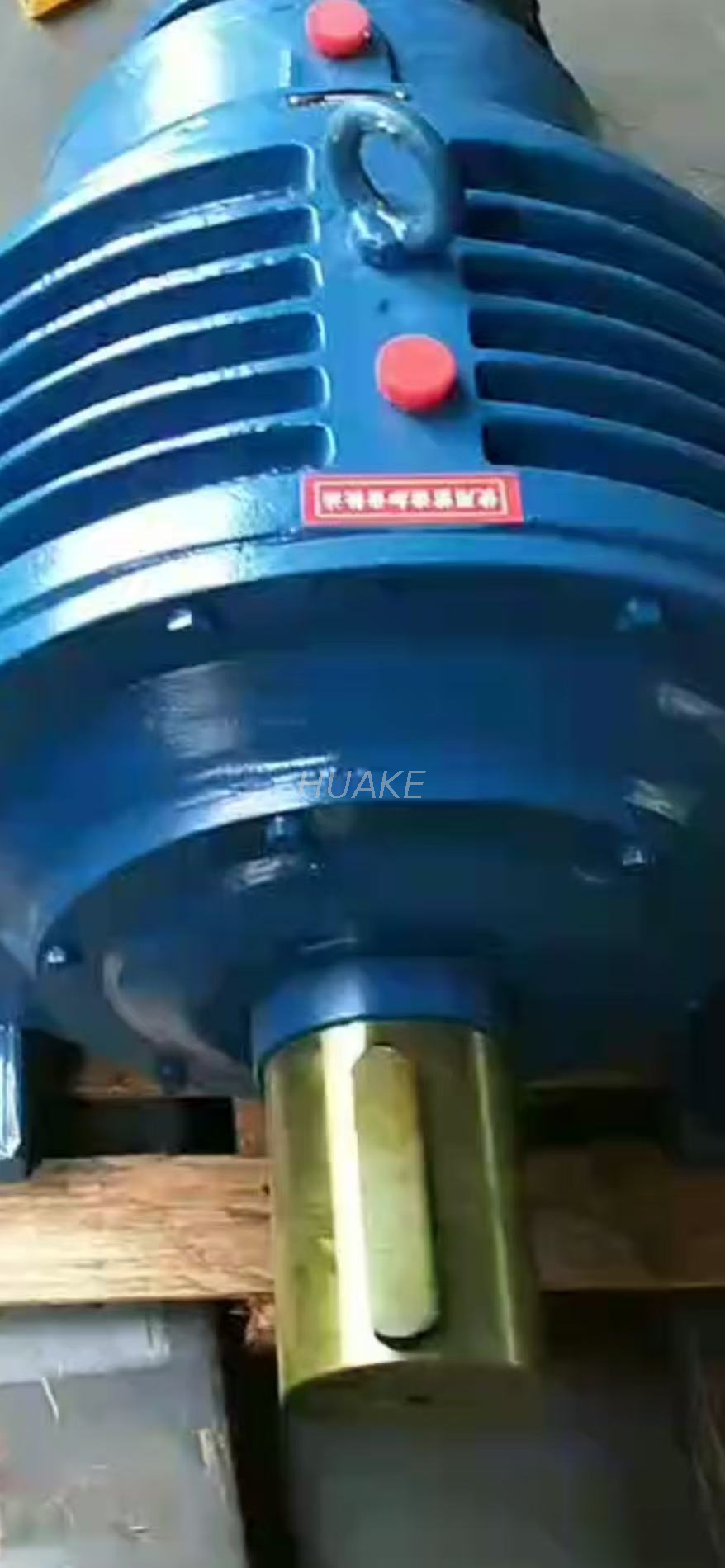
The single most determinative factor of baseline efficiency is the number of gear stages. Planetary designs utilize a central sun gear, multiple orbiting planet gears, and a fixed outer ring gear. Every time you pass power through a meshing gear set, you incur mechanical losses. Adding stages exponentially increases your available reduction ratio, but it introduces a compounding penalty to total efficiency.
Most manufacturers publish a standard efficiency baseline that reflects this physical reality. Refer to the standard efficiency drop chart below:
| Number of Stages | Typical Reduction Ratio Range | Average Mechanical Efficiency |
|---|---|---|
| 1-Stage | 3:1 to 10:1 | ~97% |
| 2-Stage | 12:1 to 100:1 | ~94% |
| 3-Stage | 120:1 to 1000:1 | ~90% |
When engineering high-torque applications requiring massive reduction ratios (e.g., 500:1), relying purely on Planetary Gear Reducers becomes inefficient. In these extreme scenarios, integrating a hybrid gearset—such as pairing a right-angle helical or worm input with a final planetary output—can sometimes optimize the physical envelope. However, standard inline planetary systems remain the most efficient choice up to the three-stage limit.
Gear tooth profiles heavily dictate the nature of mechanical friction. Properly ground and polished gears engage with a smooth rolling action. Conversely, inferior machining leaves micro-irregularities on the tooth surface. This causes sliding friction. Sliding friction acts as an abrasive force, generating excessive heat and robbing the system of kinetic energy.
Many procurement teams fall into the trap of over-specifying ultra-low backlash. Backlash is the physical play between meshing gear teeth. For highly dynamic servo applications like CNC indexing, backlash under 1 arcmin is critical. However, achieving this tight tolerance requires manufacturers to increase physical preload and narrow the meshing gap. This physically squeezes the gears together, elevating baseline friction. If your application simply drives a constant-speed conveyor, specifying ultra-low backlash actively damages your total efficiency. Choose standard backlash (3 to 7 arcmin) to let the gears spin freely.
Internal bearings support the input and output shafts, absorbing radial and axial loads. The type of bearing selected alters power transmission. Tapered roller bearings handle immense axial forces, making them perfect for heavy lifting. Yet, their larger contact area creates significant rolling resistance. Deep groove ball bearings spin with much less resistance, yielding higher efficiency, but they sacrifice load-bearing capacity.
Equally critical is the parasitic drag caused by environmental seals. Industrial reducers operating in washdown or dusty environments require IP65 or IP67 ratings. To achieve this, tight rubber lip seals grip the rotating shafts. This constant, physical rubbing creates a fixed amount of drag. In low-power applications, tight shaft seals can consume up to 2% of the motor’s total power output purely through friction.
A gearbox does not operate in isolation. How you mount it to the drive motor impacts baseline performance immediately. Mating the unit to a high-speed servo motor involves different dynamic forces than mating it to a low-speed stepper motor. High input speeds multiply churning losses within the housing.
Furthermore, motor misalignment remains a primary killer of transmission efficiency. If the motor shaft and the reducer input collar are misaligned by even a fraction of a millimeter, the system binds. This offset generates uneven radial loads against the input bearing. The bearing fights the shaft on every rotation. This condition accelerates bearing wear, spikes operating temperatures, and drops mechanical efficiency immediately upon startup.
Efficiency curves are not flat lines. They rise and fall based on how much of the rated torque you actually use. Operating a drive significantly below its rated capacity invokes the "partial load penalty." Baseline frictions—like seal drag and grease resistance—remain constant regardless of the load. If you apply full load, these fixed losses represent a tiny fraction of total power. If you apply minimal load, these fixed losses dominate the equation.
Optimal Load (80% to 100% of rating): The system easily overcomes baseline friction, delivering the catalog-rated peak efficiency.
Moderate Load (40% to 79% of rating): Efficiency dips slightly but remains acceptable. Thermal generation stays well within safe limits.
Low Load (Under 20% of rating): Efficiency plummets. The motor spends a disproportionate amount of energy just overcoming the gearbox's internal seals and thick lubricant.
Lubrication engineering, or tribology, dictates the delicate balance between protecting components and causing power drag. At high RPMs, hydrodynamic friction dominates. The internal gears act like paddles, violently churning the grease or oil. Thick, high-viscosity lubricants create massive resistance during this churning phase, generating heat. At low speeds, boundary friction becomes the threat. The oil film breaks down, allowing metal-on-metal contact.
Environmental temperatures fundamentally alter these dynamics. Operating in a cold storage facility causes synthetic oil to thicken drastically. During cold starts, the motor fights against this sludge, dropping efficiency until the unit warms up. Conversely, extreme ambient heat thins the lubricant. While this reduces churning loss, it compromises the protective film, increasing sliding friction between gear teeth.
Catalog specifications require careful interrogation. Manufacturers naturally highlight the absolute best-case scenario to market their products. A single "peak efficiency" percentage printed in a brochure rarely reflects the continuous realities of a factory floor. To evaluate these claims accurately, technical buyers must look beyond the headline numbers.
Interrogate the Performance Curves: Do not accept a static number. Request the variable efficiency curves that plot performance against input speed and applied torque. This shows you exactly how the unit behaves under your specific partial load conditions.
Verify Standardized Testing: Determine exactly how the efficiency was measured. Reputable manufacturers test against strict ISO or AGMA (American Gear Manufacturers Association) standards. If the datasheet lacks testing methodology context, treat the numbers with skepticism.
Check the Thermal Rating: Mechanical rating dictates how much torque the gears can physically survive. Thermal rating dictates how much continuous power the unit can handle before the oil overheats. Often, a unit hits its thermal dissipation limit long before it reaches its mechanical limit. If you ignore the thermal rating, your efficiency will collapse due to overheated, thinned-out oil.
Assess Vendor Documentation: During the shortlisting phase, demand detailed technical documentation. Request continuous duty cycle charts and efficiency maps recorded at variable RPMs. Transparent vendors readily provide this data.
Even the highest quality unit will underperform if implemented incorrectly. New gears require a proper break-in period. Freshly machined metal surfaces often contain microscopic burrs. Running a new system at maximum speed and maximum load on day one creates excess friction. Implementing a gradual break-in period smoothes these surfaces, allowing the system to reach optimal efficiency safely.
Mounting orientation also dictates real-world performance. A horizontal mount distributes oil evenly across the planetary gears. A vertical mount forces lubricant to pool at the bottom of the housing. The lowest gear stages drown in oil, creating massive churning losses, while the top bearings starve for lubrication, increasing rolling friction.
You must balance performance with reality. Specifying premium aerospace-grade materials or exotic low-friction seals for a standard industrial conveyor is gross over-engineering. It inflates your upfront costs without delivering a tangible operational return.
Next-Step Checklist for Engineering Teams:
Verify drive motor flange compatibility to prevent alignment-induced radial loads.
Calculate application-specific dynamic safety factors rather than relying on generic multipliers.
Request duty-cycle specific thermal modeling from shortlisted vendors.
Match the required backlash strictly to the application's positioning needs.
Efficiency is Dynamic: The mechanical efficiency of a gear reducer is never a static catalog number. It is a constantly shifting output dictated by the exact combination of gear stages, applied load, input speed, and lubricant temperature.
Avoid the Low-Load Trap: Oversizing a gearbox too aggressively forces it to run at a fraction of its capacity, amplifying the negative impact of internal seal and bearing drag.
Tolerances Dictate Friction: Specifying tighter backlash than necessary actively harms mechanical efficiency by increasing internal preload and sliding friction.
Thermal Limits Rule: A unit's ability to dissipate heat safely often matters more than its theoretical mechanical limit during continuous duty operations.
Ultimately, evaluating a precision drive requires a holistic view of the entire operational environment. You cannot optimize the gear set while ignoring the motor, the coupling, or the ambient facility temperature. We highly recommend bringing your specific duty cycle data, load profiles, and ambient thermal constraints directly to an applications engineer. By engaging in custom sizing and validation, you ensure the selected unit hits its peak performance marks safely, consistently, and reliably on your factory floor.
A: Higher reduction ratios require adding more planetary gear stages. Every additional stage introduces another set of meshing gears and supporting bearings. Each physical contact point generates friction. This compounding mechanical resistance reliably drops total transmission efficiency by roughly 2% to 4% for every stage added to the system.
A: Intermittent operation gives internal components time to cool, keeping oil viscosity stable. Continuous operation traps heat inside the housing. As internal temperatures rise, the lubricant thins out. This thermal shift lowers churning resistance but can increase metal-to-metal sliding friction, eventually altering the unit's steady-state efficiency.
A: It is possible, but risky. Switching to a lower-viscosity synthetic oil reduces churning drag at high speeds. However, unauthorized aftermarket fluid swaps might fail to provide adequate film strength for the gear teeth. Furthermore, unapproved chemicals can degrade internal rubber seals rapidly and instantly void manufacturer warranties.
A: No, this is a common misconception. Achieving extreme low backlash requires shrinking the gap between gear teeth and increasing bearing preload. This tighter physical configuration actually generates more constant sliding friction. Consequently, an ultra-low backlash unit often exhibits slightly lower mechanical efficiency than a standard-backlash equivalent.


