
- All
- Product Name
- Product Keyword
- Product Model
- Product Summary
- Product Description
- Multi Field Search


Views: 0 Author: Site Editor Publish Time: 2026-03-26 Origin: Site


Worm gear reducers play a pivotal role in many industrial applications. They offer high torque in compact designs, making them essential for systems that require efficient power transmission in tight spaces. But how do these mechanisms actually work?
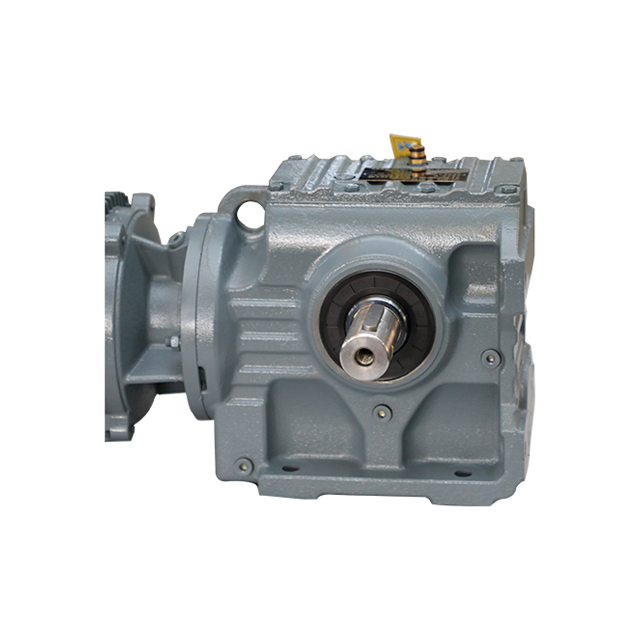
In this article, we’ll explore what worm gear reducers are, how they function, and how to choose the right one. By the end, you'll understand how to select the best reducer for your machinery needs, balancing torque, speed, and efficiency.
One of the defining characteristics of worm gear reducers is their ability to achieve high torque output in a compact design. This is made possible by the screw-like design of the worm, which provides a mechanical advantage over traditional gear systems. HUAKE's large worm gear reducers are specifically designed to meet the needs of heavy-duty machinery and mining equipment, where high torque is required in limited spaces.
The compact nature of worm gear reducers makes them highly attractive for applications where space is at a premium. Industries such as robotics and conveyor systems rely on this space-saving ability to pack high-performance components into tight areas.
The right-angle configuration is another significant advantage of worm gear reducers. The worm and wheel mesh at a 90-degree angle, allowing the system to transmit power efficiently even in tight spaces. This is particularly valuable in machinery designs where layout constraints limit the space available for gear systems. HUAKE's right-angle worm gear reducers are designed specifically to fit these space-limited environments, providing powerful performance without compromising on efficiency.
For instance, in automated systems or conveyors, where space for traditional gear setups is limited, the right-angle configuration allows for optimal power transmission. By utilizing HUAKE’s compact right-angle designs, industries can avoid the complexity and bulk of other gear systems, resulting in a more streamlined and efficient machinery setup.
Another key benefit of worm gear reducers is their self-locking capability. When the worm gear is under load, the design prevents the wheel from turning unless driven by the worm itself. This feature is particularly useful in load-holding applications like hoists, lifts, and winches, where the load needs to be held in place without external braking systems.
For example, HUAKE's low backlash worm gear reducers are ideal for applications that require high precision while also benefiting from the self-locking feature. These reducers prevent the back-driving of the motor when not in use, ensuring that heavy loads remain securely in place without the risk of slippage.
While there are various types of gear reducers such as helical, bevel, and planetary gears, worm gear reducers are still the preferred option for many applications due to their unique combination of benefits. For applications requiring high reduction ratios in small spaces, worm gear reducers excel where others may not be as effective. They are particularly advantageous when load-holding and right-angle power transmission are critical.
When compared to other gearboxes like planetary gears, which offer higher efficiency but require more space, worm gear reducers remain a go-to choice for applications in compact machinery setups that demand high torque and precision.
Choosing the right worm gear reducer starts with understanding the torque and speed requirements for your application. Torque is the rotational force that the reducer needs to handle, while speed refers to how fast the driven equipment must operate. For instance, HUAKE's large worm gear reducers are ideal for applications requiring high torque at low speeds, such as heavy machinery and mining equipment. These reducers provide the necessary torque without compromising on efficiency.
Knowing the duty cycle (whether the application requires continuous or intermittent operation) is essential in selecting the correct reducer. This ensures that the selected reducer will meet the operational demands of your system without overloading or overheating.
The reduction ratio determines how much the worm gear reduces the speed of the incoming shaft, which directly influences the output speed and torque. Worm gear reducers come in a variety of reduction ratios, and selecting the right one is crucial for optimal performance. If the application requires a large reduction ratio, HUAKE’s large worm gear reducers are specifically designed for these scenarios, providing powerful torque while keeping the size manageable.
Additionally, consider the duty cycle of the application. Heavy-duty applications will need more robust reducers capable of withstanding continuous use, while lighter-duty systems may perform just fine with smaller, less expensive models.
The self-locking feature of worm gears is a significant benefit in many scenarios but may be a limitation in others. For applications that need to hold a load in place without the risk of back-driving, this feature is highly desirable. For example, HUAKE's low backlash worm gear reducers are ideal for load-holding systems due to their self-locking feature.
However, in applications where continuous motion is required, the self-locking mechanism could cause unintended interruptions. In such cases, you may want to explore other types of reducers without this feature.
One of the drawbacks of worm gear reducers is their lower efficiency compared to other types of gears. The friction between the worm and the wheel generates heat, which leads to energy losses. For instance, high reduction ratios tend to produce more friction, reducing the overall efficiency.
However, the trade-off in efficiency may be acceptable in many applications where the benefits of high torque and space-saving design outweigh the losses. Additionally, proper lubrication and maintenance can help mitigate some of the friction-related efficiency losses.
Worm gear reducers come in various mounting styles and shaft configurations. HUAKE offers a variety of mounting styles, such as motor-mount options and foot-mounted configurations, to fit different applications. Choosing the right configuration depends on the space available and how the reducer will be integrated into the existing machinery.
For example, in compact machinery, a hollow shaft configuration may be necessary to fit with other components, while a solid shaft configuration might be better for heavy-duty systems that require higher torque.
Table 1: Comparison of Different Worm Gear Reducer Configurations
Configuration | Best For | Key Feature |
Hollow Shaft | Space-limited applications | Easier integration with existing systems |
Solid Shaft | Heavy-duty systems | Provides stronger torque handling capabilities |
Motor-Mount | Direct motor coupling applications | Compact and easy to integrate into machinery |
The worm gear system works by turning the worm, a screw-like gear, to turn the worm wheel, a gear meshing with the worm. This system allows for high torque output and speed reduction in a compact size. The unique screw-like design of the worm provides a mechanical advantage over traditional gear systems.
The efficiency of the worm gear system is affected by the number of starts (the number of threads on the worm), the lead angle (the angle of the worm thread), and the reduction ratio (the speed reduction achieved). The combination of these factors makes worm gears ideal for applications requiring a high reduction ratio in a compact design.
The gear ratio defines the speed reduction achieved by the worm gear system. Higher ratios lead to greater torque but lower speed, and vice versa. The number of worm starts and the lead angle also play critical roles in determining how smoothly the system operates. These factors influence the amount of friction between the worm and the wheel, which, in turn, impacts the overall efficiency.
For example, HUAKE’s low backlash worm gear reducers are designed to minimize friction and provide smoother operation, which is crucial for applications requiring high precision.
Friction between the worm and the wheel is one of the key factors that impact the efficiency of worm gear reducers. Proper lubrication is essential for reducing friction and preventing excessive wear and heat generation. Without sufficient lubrication, the heat generated by friction can lead to reduced efficiency and potential failure of the reducer.
For instance, HUAKE’s stainless steel worm gear reducers are designed with high-quality materials that not only reduce friction but also offer improved corrosion resistance, making them ideal for environments where lubrication is crucial.
Worm gear reducers are generally less efficient at higher reduction ratios due to the increased friction between the worm and the wheel. However, in applications where high torque and space efficiency are more important than energy efficiency, worm gears are still the preferred choice.
In low-ratio applications, the efficiency of worm gear reducers is better, but for high-ratio applications, the efficiency drops due to higher friction. Understanding these trade-offs helps in selecting the right worm gear reducer for your specific needs.
Worm gear reducers are ideal for high-torque applications that require compact design, smooth motion, and self-locking features. Despite some trade-offs like lower efficiency and heat generation, their benefits often outweigh these drawbacks. Whether used in conveyors, robotics, or load-holding systems, selecting the right worm gear reducer is essential for optimal performance. HUAKE offers high-torque, reliable worm gear reducers that provide value with their durability, space efficiency, and performance, making them perfect for demanding industrial applications.
A: A worm gear reducer is a type of gear mechanism that consists of a worm (a screw-like gear) and a worm wheel. It is designed to reduce speed and increase torque in machinery while maintaining a compact design.
A: Worm gear reducers work by using a worm to turn a worm wheel at a right angle, reducing speed and multiplying torque. This design allows for high torque output in a compact form, ideal for tight spaces.
A: To select the right worm gear reducer, consider factors like required torque, speed, reduction ratio, and duty cycle. Ensure the reducer's specifications match the needs of your application, such as load handling and space constraints.
A: Common causes of failure include improper lubrication, excessive heat generation, overloads, and misalignment. Regular maintenance and lubrication can help prevent these issues and extend the lifespan of your worm gear reducer.
A: Worm gear reducers are typically used for applications requiring low-speed, high-torque operation. They may not be ideal for high-speed applications due to their efficiency losses at higher ratios.


